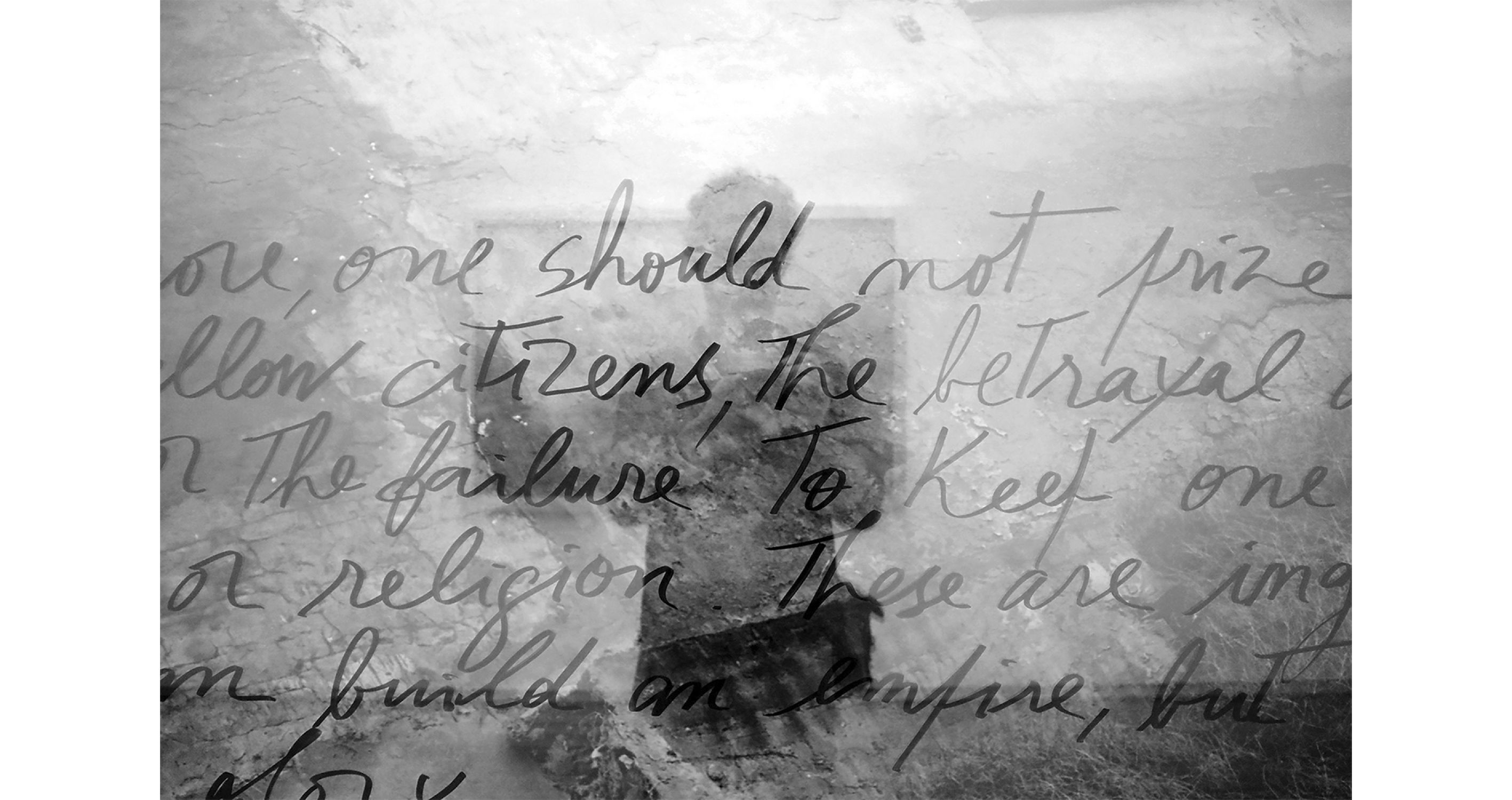

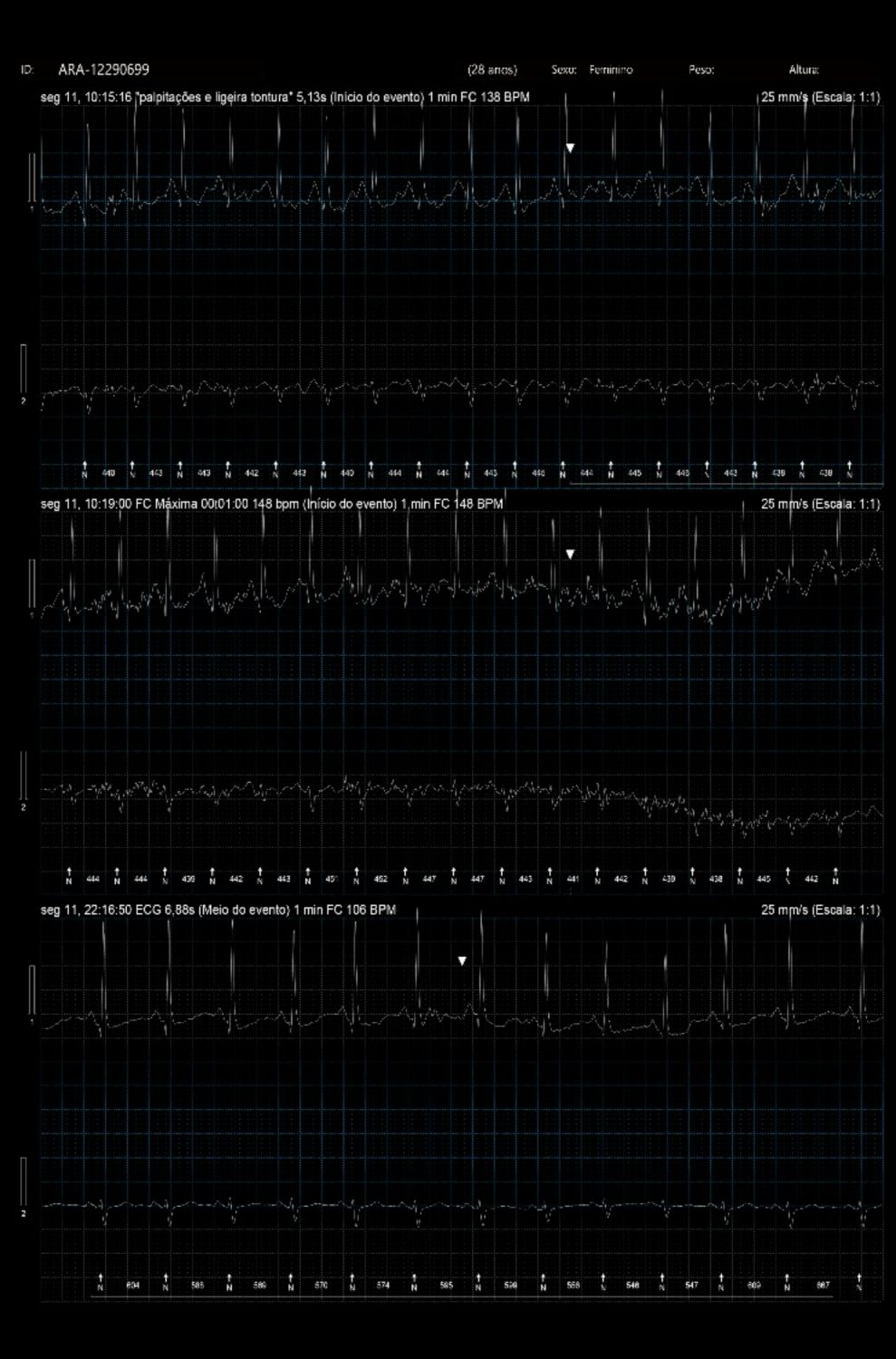
Objectophilia
In four years I’ll be the same age as my father when he died. I have very few memories of him, completed only with the fictions that surround family albums.
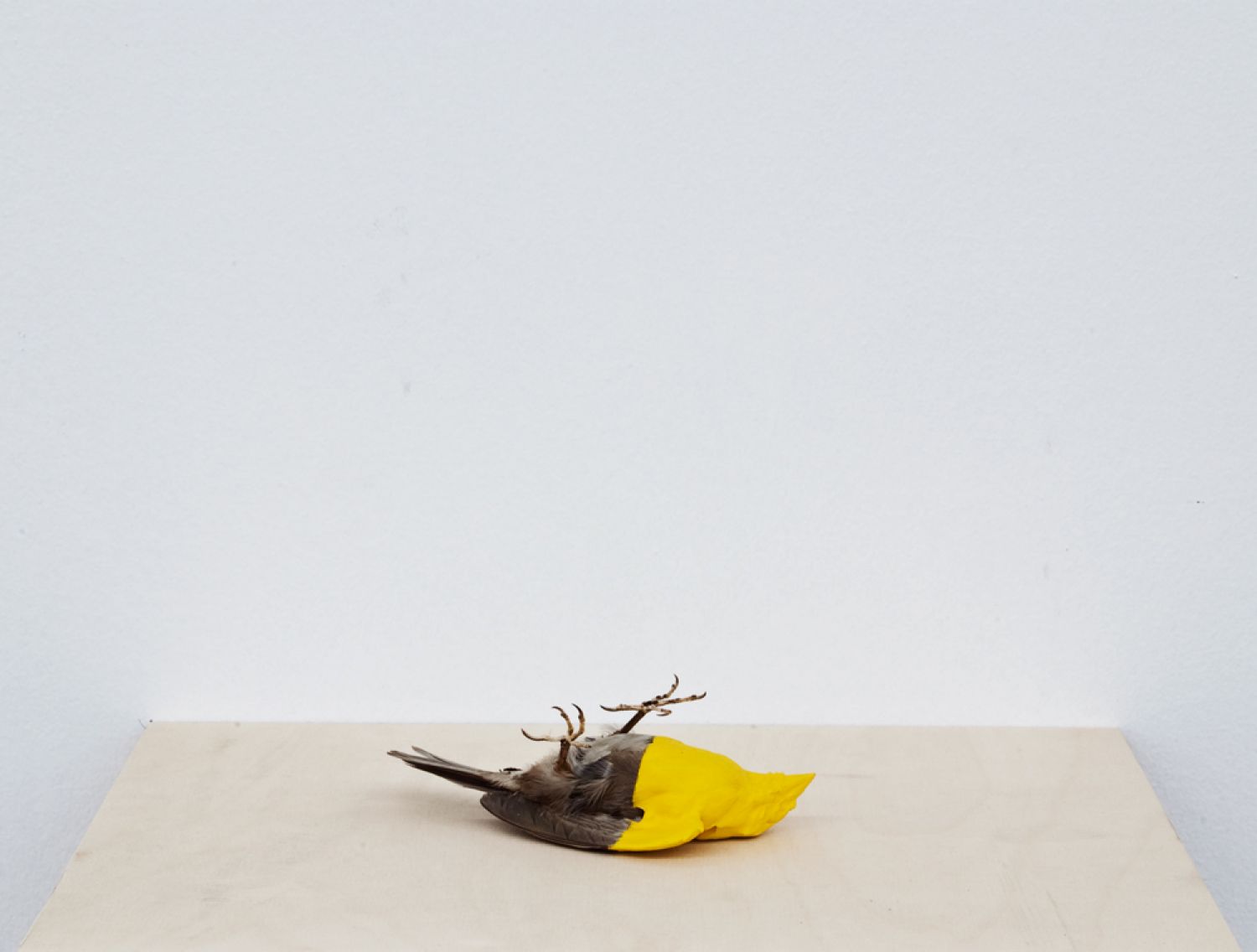
I remember a lunch when our green parakeet, which was allowed to fly around the house sometimes, fell in the beer glass and my father took it out, upside down, completely soaked. It lived long enough only to disappear in one of those escapades that probably boosted its confidence. Months later it was my father who precipitated himself in the dim fluid of the river, but no one brought him back, upside down, completely soaked.
After his death I had recurrent dreams. In one of them I was sleeping in my room and a cauldron full of thick liquid, of a red wine colour, bubbled, sitting on incandescent blocks right beside my bed. I saw snakes in belts hanging from the doorknob, and lurid shadows made out of clothes piled on a chair and I fell into the void almost every night. As I had very little information about him, I became especially attached to some of his everyday objects. I imagined how he would handle them and which ones were his favourites. This life around objects became so strong that today I have a hard time disassociating from any object that goes through my life and it is with sorrow that I see them disappear or lose their utility, pure and simple. The thing is that there is this life burning in the objects that surround us. That life comes from the fact that we are not only defined by our environment, but that we are especially defined or define ourselves, by every item with which we choose to surround ourselves.
I have friends that have very few material possessions and even though I empathize with the idea, it is impossible for me to entirely mimic their detachment. Even in my most liberating moments.
Objects are what they are, but we also are what we are, in part, because of them. We don’t need them to be alive, but we need them to go about our lives.
When an object we can’t get rid of, for emotional reasons, comes into view, and that object for some reason is no longer apt to continue its functional life, part of our unconscious process of preservation reveals itself to be far above materialism. To make it an object of inner consolation, to give it a metaphysical meaning, is the way to appease our longing to collect, that is, to hold in close proximity the result of our desire for all those things that we accumulate unnecessarily.
It’s common to exacerbate objects belonging to deceased loved ones, or even day-to-day objects. The art of the object, its symbolic and formal manipulation, is ingrained in our culture, in religious rituals, in primitive manifestations or simply in the mustiness of a closed room, in the mausoleum of a loved one or in a pantry. It is also in the collections of youth's evidences and in the many imprints from different times of our lives that we hold on to. We photograph to avoid the death of a moment and we believe the image retains, in printed form, part of that very moment's emotion. Somehow, life also imprints on matter, and much like photography is a vehicle for a state of mind, so an object is also endowed with an inexplicable metaphysical spirit that has been carved by time and by its purpose.
We surround ourselves with objects that bring us comfort, because we identify with them. And in this way we go about building our own lifeless self-portrait, set up by the nature of what surrounds us. The choice of what is around us is not only the result of a constant redefining of ourselves, but is also, ultimately, a constant projection of ourselves that keeps being thrown back at us, as if accessing our memory in a tangible way. It becomes physical memory and in that reminiscing are the most varied states of our beings. Our catalogue of emotional states, imagistic and so forth, mirrored in the choices that we make, when we pick something to have in front of us.
But this process may trigger a nefarious consequence, the possibility of ferociously loving one of these items, in detriment of living a human relationship. Such condition echoes a disease with the same characteristics, a similar passionate feeling that one projects on a person - but in this case the object of affection is a specific item.
It is easier to love the projection of someone, even of ourselves, than to blindly love the abyss of meddling with another. It is easier to love that which does not answer back at us provocatively and that doesn’t derail us from our pleasant daily path.
And so, we love stamp collections, sports cars, mugs, antique items, this or that work of art. We also love people that we elevate to the status of objects, just because they match the dining room curtains.
–
Note: «Objectophilia», is based in the book La cosa che vuoi dirmi è bella o brutta? by João Ferro Martins, published by 3+1 Arte Contemporânea, Lisbon, 2014