Shimmer and Shock: Ming Smith and Arthur Jafa
Ming Smith and Arthur Jafa make images resonate. Through photography, moving images and music, both summon the presence of living bodies with an intensity that can approach the sacred. Portraiture becomes a space of apparition, memory and activation. Yet their visual worlds move and breathe according to radically different rhythms and emotional registers.
For Smith and Jafa, images do more than observe or document; they become ways of approaching realities that representation alone can never fully grasp. What they share is a sense that the multiplicity of Black experiences can never be fully contained within images: something always exceeds the visual and calls to be felt – through rhythm and sound, motion and emotion. Music becomes a privileged means through which this excess can manifest itself: explicitly in Jafa, where sound and beat activate the archive and simultaneously give images a physical and spiritual force; more implicitly in Smith, whose immersion in jazz infuses the photographic image with breath, duration, intuition and improvisation. In both, music seems to carry something that vision alone cannot contain. Yet the two artists mobilise the image differently. Where Jafa activates the archive through assemblage, sequence, collision and the dark, tragic pulse of history, Smith searches within the photographic image for another temporality – one made of light, movement, and disappearance. Jafa makes images strike and history tremble. Smith allows bodies to emerge from darkness and shimmer, while remaining beyond our grasp.
In the context of the 2026 Venice Biennale, Jafa’s work is presented alongside Richard Prince in Helter Skelter at Fondazione Prada[1]. The exhibition explicitly foregrounds Jafa and Prince’s radical appropriation, collection, and manipulation of images drawn from cinema, news, advertising, popular culture, music, internet, and the vast reservoir of circulating American imagery. In Jafa’s hands, the archive is never neutral.
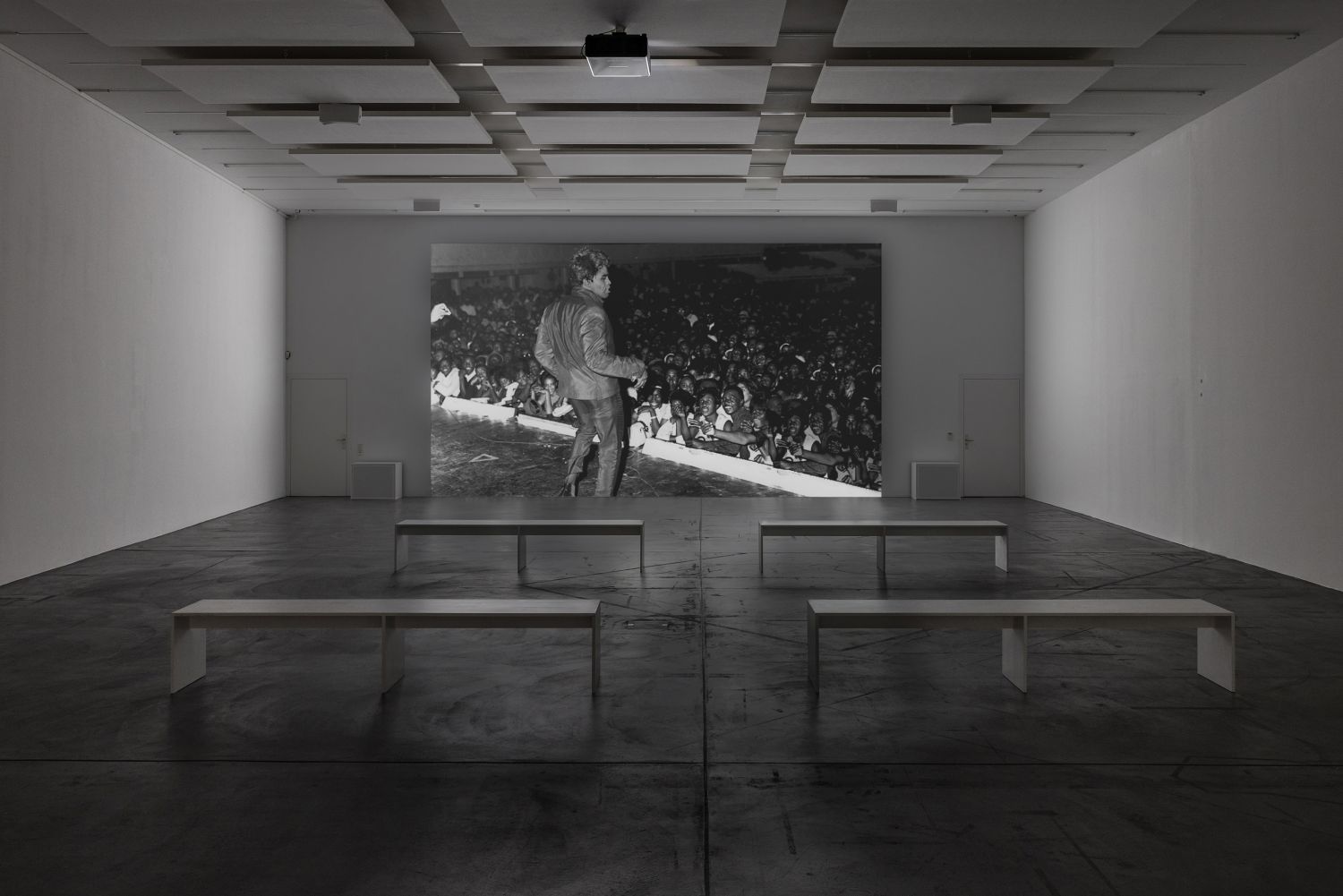
His video installation SloPEX (2023) comprises 841 images (mostly still) projected in hypnotic succession to the sparse, low-frequency pulses of minimal techno. The soundtrack derives from the stripping-down of APEX, developed by Detroit techno pioneer and DJ Robert Hood. Reduced to slow beat, bass and repetition, the music gives Jafa’s visual montage a deep and sacred dimension: images no longer simply follow one another but strike, linger and recede like pulses within an extended, dark composition. Historical events collide with street fights and scenes of violence; ritual scarifications and face painting with tattoos and open wounds; movie and music celebrities with animals, monstrous figures and fragments of popular culture. Caught within this raw, relentless pulse, heterogeneous images contaminate and amplify one another, producing an emotional pressure far greater than any one of them could carry alone.
Jafa’s method of collecting, displacing and recombining pre-existing images has its assumed filiation with Marcel Duchamp and the Dada strategy of appropriation and collage. Duchamp’s readymades demonstrated that removing an existing object from its habitual context and inserting it into another system of attention could radically alter its meaning and status, as the urinal submitted as Fountain (1917) is the paradigmatic example. Jafa performs a related operation with images rather than objects. Extracted from newspapers, magazines, cinema, television, the internet and other circuits of mass circulation, his found images are severed from their original contexts and recharged through selection, juxtaposition, scale, sound, and repetition. Yet Jafa pushes this Duchampian gesture into a very different historical and affective territory. Displacement does not cool the image into conceptual distance; it intensifies its presence and power. Images that might have been rapidly consumed, forgotten or neutralised within the media stream are made to confront one another and, through that encounter, recover an unsettling political, emotional, and sometimes spiritual charge.
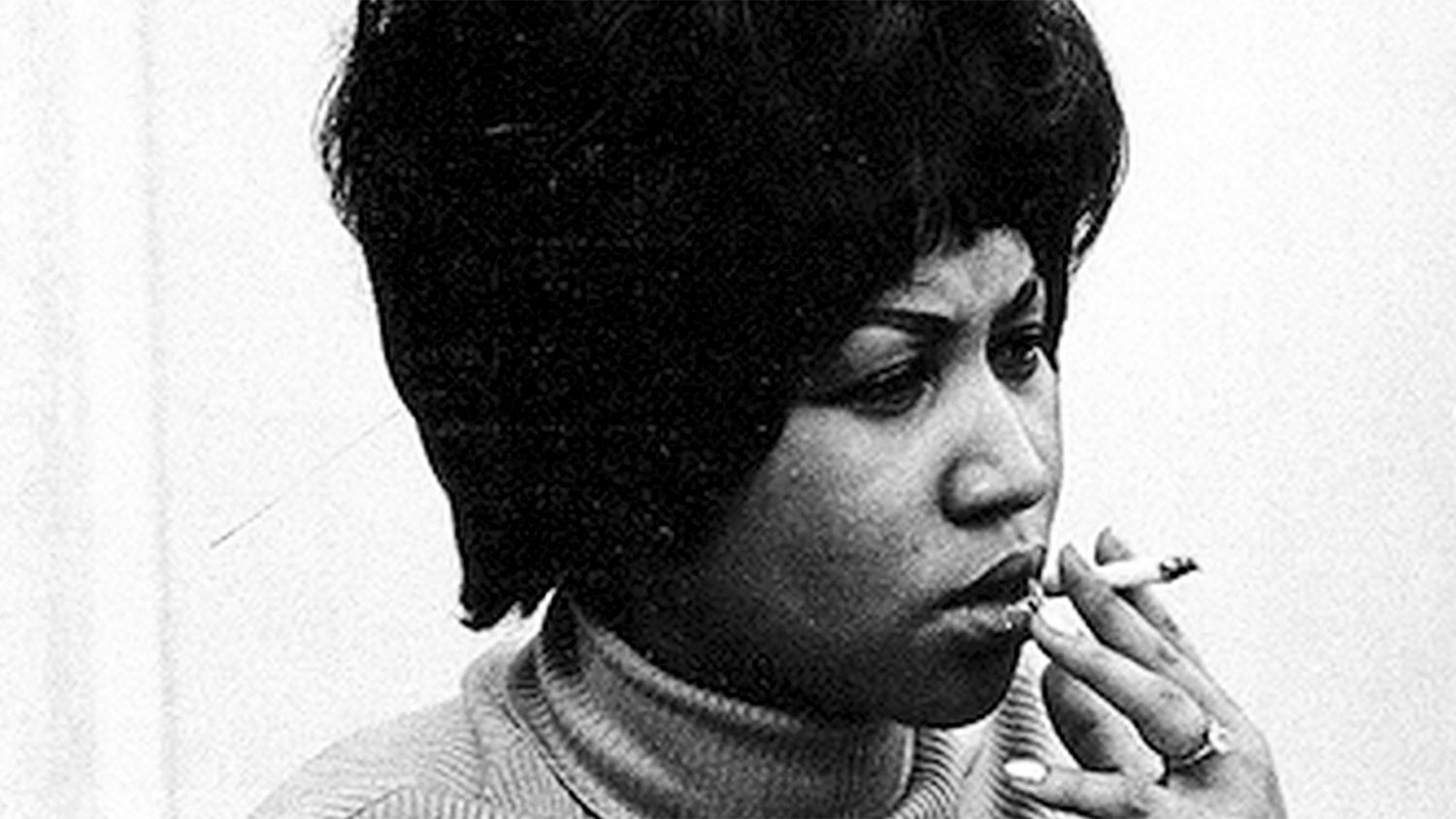
But Jafa’s montage does not only reactivate images; it also activates the viewer. Their mesmerising succession directly mobilises our affects, drawing us into unstable movements between empathy and discomfort, attraction and repulsion, recognition and shock. The meaning of the montage therefore emerges not only between images, but also between the sequence itself and the emotional body of the spectator. Rather than allowing us to remain detached witnesses, Jafa makes “seeing” an affective encounter in which the histories and bodies pulsing before us demand – however fleetingly – a response, giving form to the desire that what has been wounded, removed or destroyed might somehow be healed, repaired, restored or imagined otherwise.
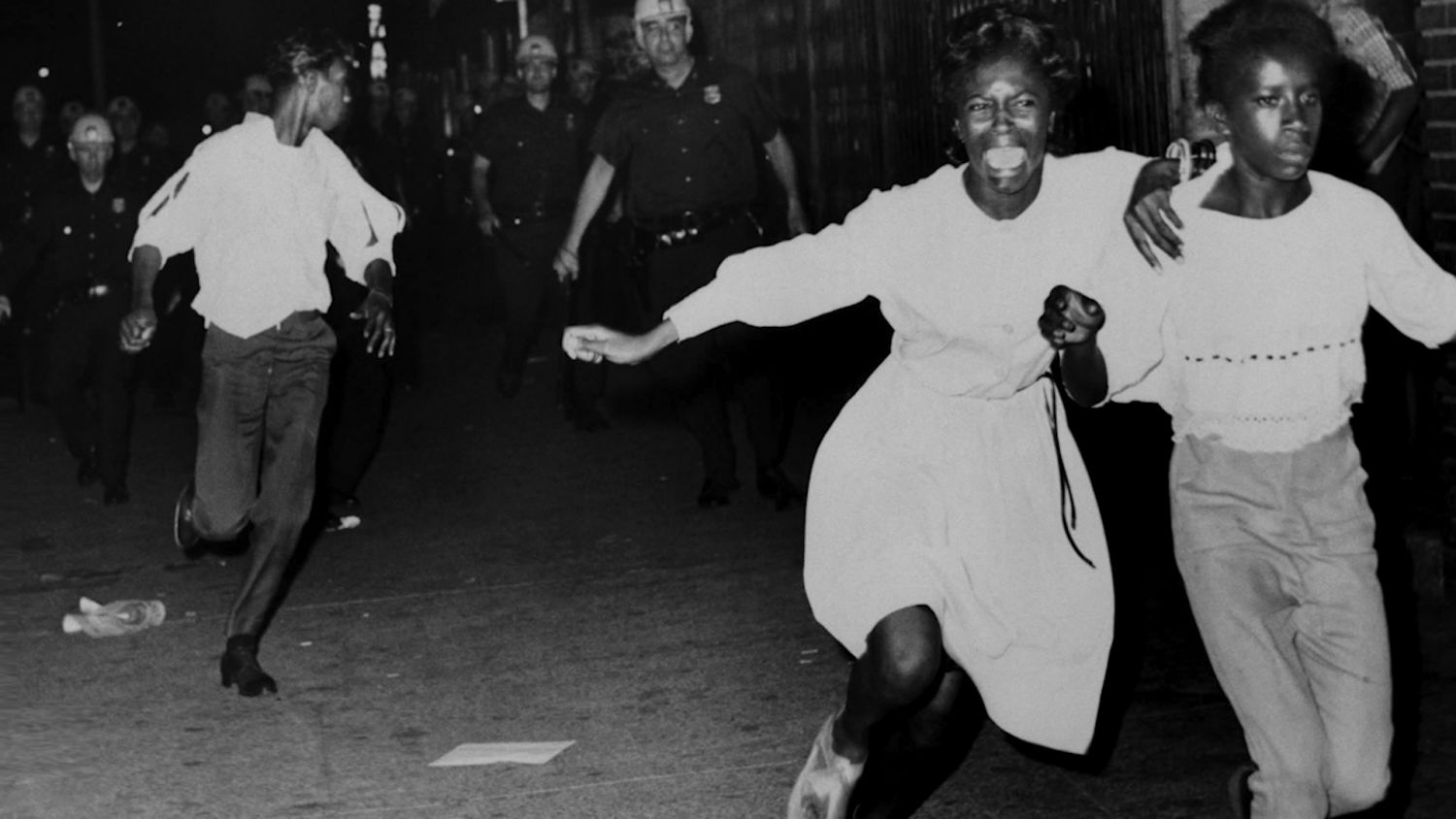
Music is fundamental to Jafa’s entire conception of the image. His work can be understood as a contemporary visual-art expression of the profound historical immersion of Black communities in musical creation – from gospel, blues, swing and jazz in its multiple forms to reggae, dub, rock, rap, hip-hop and techno. Across these traditions, music has offered ways of giving form to experiences that exceed ordinary language, while transforming histories of suffering, absence, rupture and dispossession into extraordinary forms of invention. Music becomes a space of resistance, assertion and transgression, but equally of pleasure, joy and empowerment – a vivid spiritual territory in which collective memories and beliefs can be carried, transformed and shared. In this sense, music does not simply accompany experience: it can become a means of surviving it, exceeding it and, collectively, imagining forms of healing. Jafa does not simply accompany images with music; he makes images behave musically, absorbing principles of rhythm, syncopation, repetition, improvisation and sampling into montage itself.
In Love Is the Message, The Message Is Death (2016), found and original footage of Black life – police violence and mourning alongside dance, sport, sex, creativity and transcendence – is carried by the gospel-inflected swell of Kanye West’s Ultralight Beam. Image and music alternately converge and pull against one another, producing something close to a secular liturgy in which trauma is neither erased nor resolved, but passed through collective expressions of beauty, faith, resilience, empowerment and ecstatic release. Music becomes, for Jafa, not merely a soundtrack to Black experience but one of the forms through which suffering can be transmuted into rhythm, memory, beauty, and survival. And if Jafa’s recombination of pre-existing images has a visual-art genealogy in the readymade and collage, it simultaneously draws on a musical genealogy of sampling, remixing and improvisation, characteristic of jazz and hip-hop, and on the transformative processes of dub, where post-production becomes an act of radical subtraction: a composition is dismantled and reconfigured around bass and rhythm. While sampling recombines existing material, dub strips an existing structure apart and reconstructs it through absence, repetition and resonance[2].
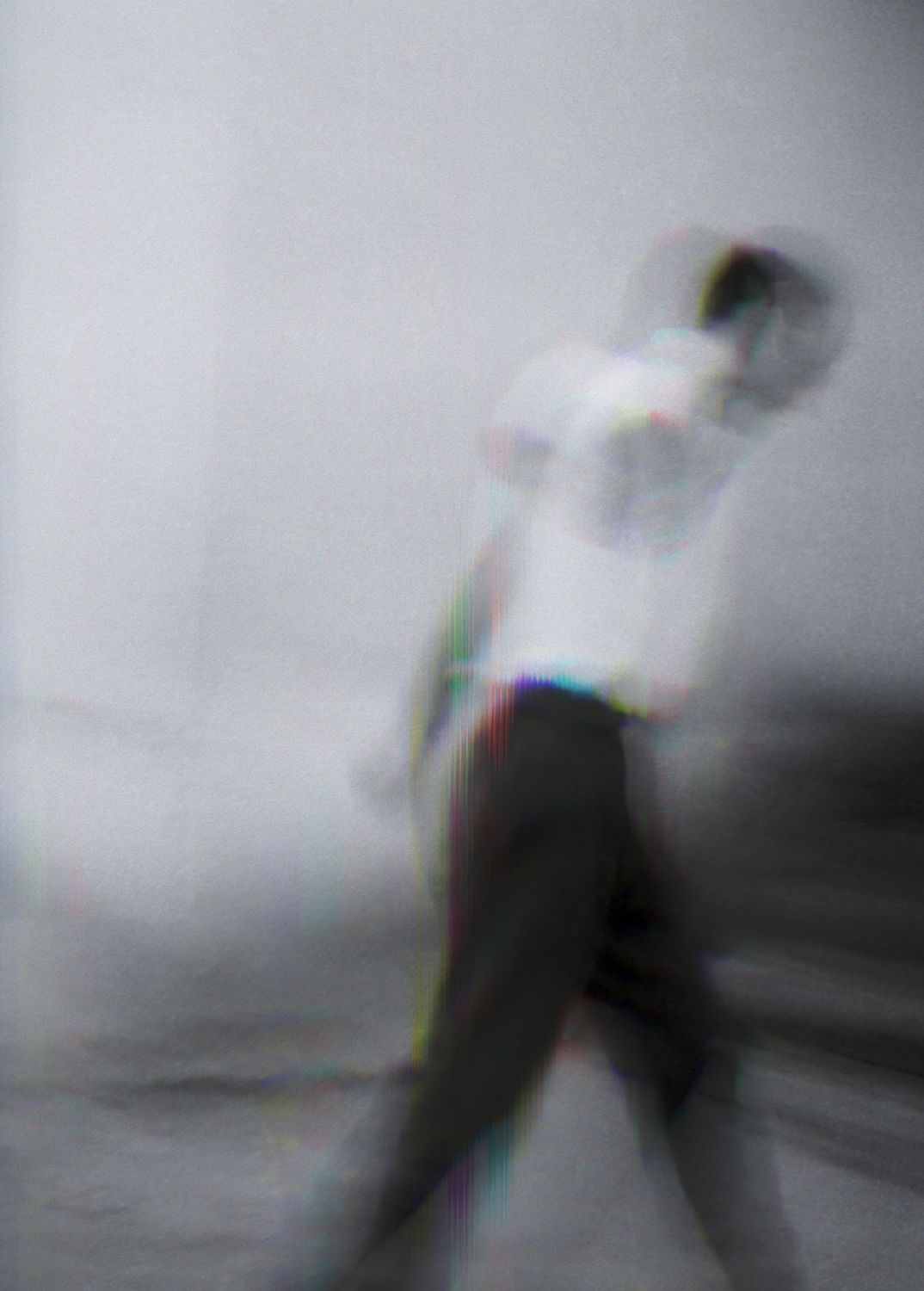
Smith works from a different emotional register. The exhibition Wandering Light organised in the context of Les rencontres d’Arles[3] revealed how her images do not strike so much as hover. The jazz musicians she photographed – Sun Ra, Pharoah Sanders and others – don’t appear as stable documentary subjects. They seem to materialise from the void. Light trembles around them; instruments dissolve into streaks; bodies become porous. In Sun Ra Space II (1978), the musician's glittering costume appears almost extraterrestrial, while in photographs such as Circular Breathing (1980), the human figure seems suspended between corporeal presence and disappearance. Smith's experiments with shutter speed, movement, and exposure allow photography to behave almost musically: the image stretches itself across time rather than freezing an instant.
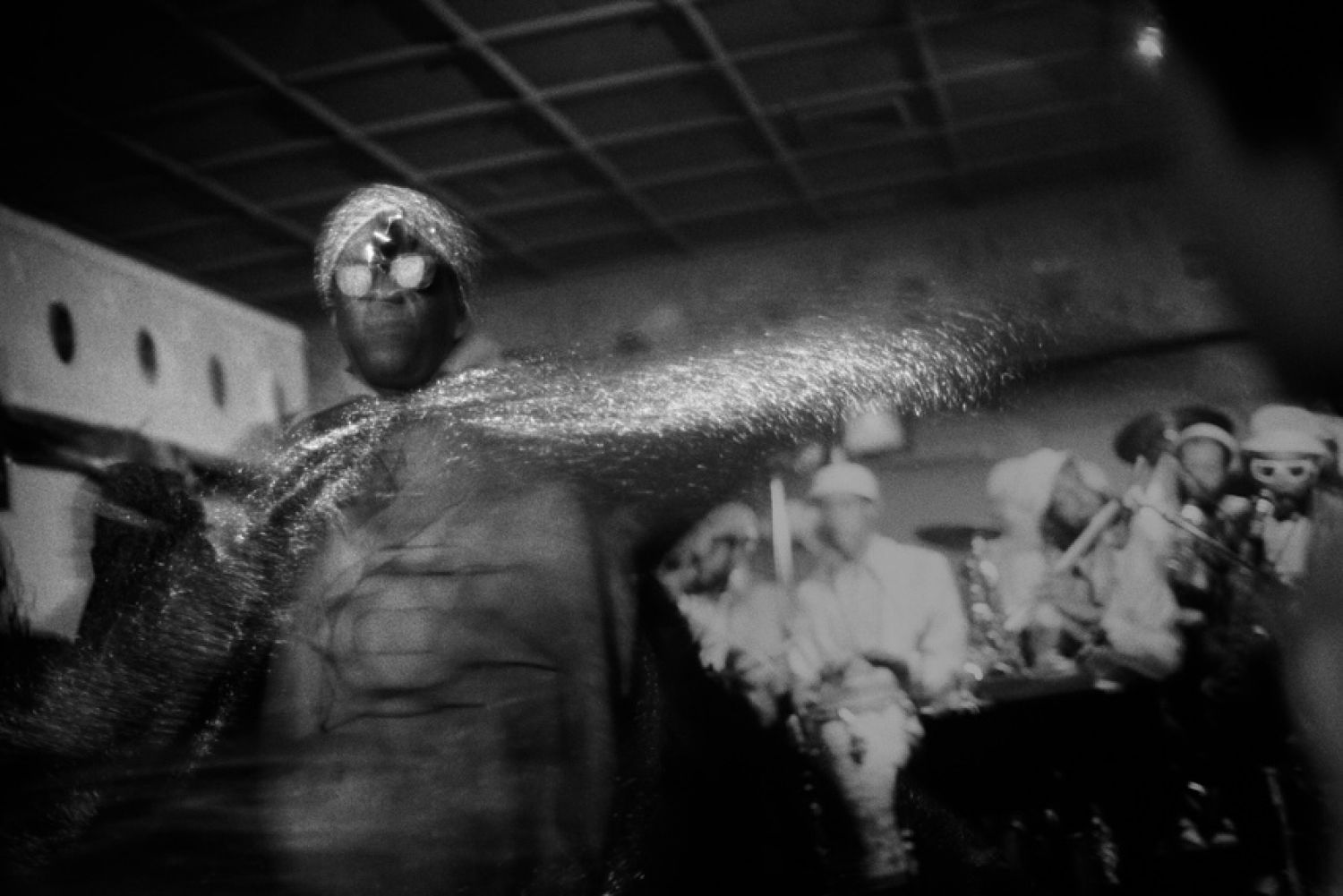
This is perhaps where Smith and Jafa come closest. Both refuse the photograph as a fixed piece of evidence; for both, Black experience exceeds what any single image can contain. Music consequently becomes an important model for seeing. Jafa constructs rhythm through sound and digital editing, synchronising them (or not) within performative audiovisual installations, whereas Smith inscribes duration and rhythm within the photographic exposure itself. Jafa sets still images and photographs in motion, creating a staccato temporality through their succession; Smith reveals movement and a jazz-like temporality as already haunting the photographic image.
Yet the emotional consequences are very different. Jafa's images are percussive and their montage vibrates like an earthquake. The images arrive with an almost seismic force, carrying the accumulated weight of both revealed and concealed American history: racism, violence, resistance, popular culture, music, ecstasy, sexuality, and political rebellion. The sequence brings anonymous individuals into proximity with artists, musicians, thinkers and countercultural figures, alongside images drawn from the mass media, as though Black cultural history were continually struggling against the machinery that represents, consumes and, at times, destroys it. Jafa’s darkness is therefore never merely visual: it resounds viscerally and historically.
Smith's darkness is more nocturnal, celestial, meditative, oneiric. She enters the shadows in search of light as an existential and visual strategy to transcend the individual and collective pain and suffering. Her photographs possess an extraordinary tenderness toward either marginalised or celebrated human beings. A face emerging from grain, a musician half swallowed by darkness, the metallic glimmer of an instrument, a body dissolving through movement: these are fragile events. Instead of insisting that photography make its subjects completely visible, Smith permits them to remain partially unknowable, distant, almost secret. Her blur is a form of protection and intimacy. The person photographed retains something that the camera and the viewers cannot possess.
That quality becomes particularly powerful in her self-portraits. In Self-Portrait as Josephine Baker, Smith does not simply impersonate Baker. She inserts herself into an already complicated history of performance, glamour, Black femininity, and European fantasies of exoticism. The surrounding animal figures and theatrical props push the image toward collage and masquerade. Identity becomes paradoxically camouflaged and staged all at once rather than revealed. The self is simultaneously photographer, performer, and the author of a sophisticated layered image.
There is an unexpected bridge here to Jafa. Both artists reflect upon the fact that Black identities have always existed inside an enormous field of images made by others. One possible response is to assume authorship, or to reclaim, recombine and reactivate those produced images. Jafa does this through appropriation and montage. Smith does it more often through presence: she enters the image herself, or approaches the person close enough for photography to become a magical vision rather than a classification, an encounter rather than a capture. And this difference matters. Smith’s photographs resist precisely through their refusal to reduce Black lives to injury or socio-political representation. Instead, her subjects are mysterious, glamorous, eccentric, erotic, cosmic, contemplative, joyful, melancholic, or simply radiating. Photography becomes a place in which the self is allowed to remain fluid and inaccessible.
Perhaps no photograph embodies this quality more movingly than Circular Breathing, Hart Leroy Bibbs. Bibbs appears almost swallowed by darkness, his head inclined, his face only partially released into visibility by a soft, trembling light. The photograph feels extraordinarily intimate, yet it refuses the descriptive clarity conventionally associated with portraiture. We do not so much inspect Bibbs as sense his presence and inner tonality. His closed or lowered gaze withdraws him from us, while the grain and blur make his body appear suspended between materiality and dissolution. Darkness does not function here as an absence of information: it becomes a substance surrounding and protecting the figure.
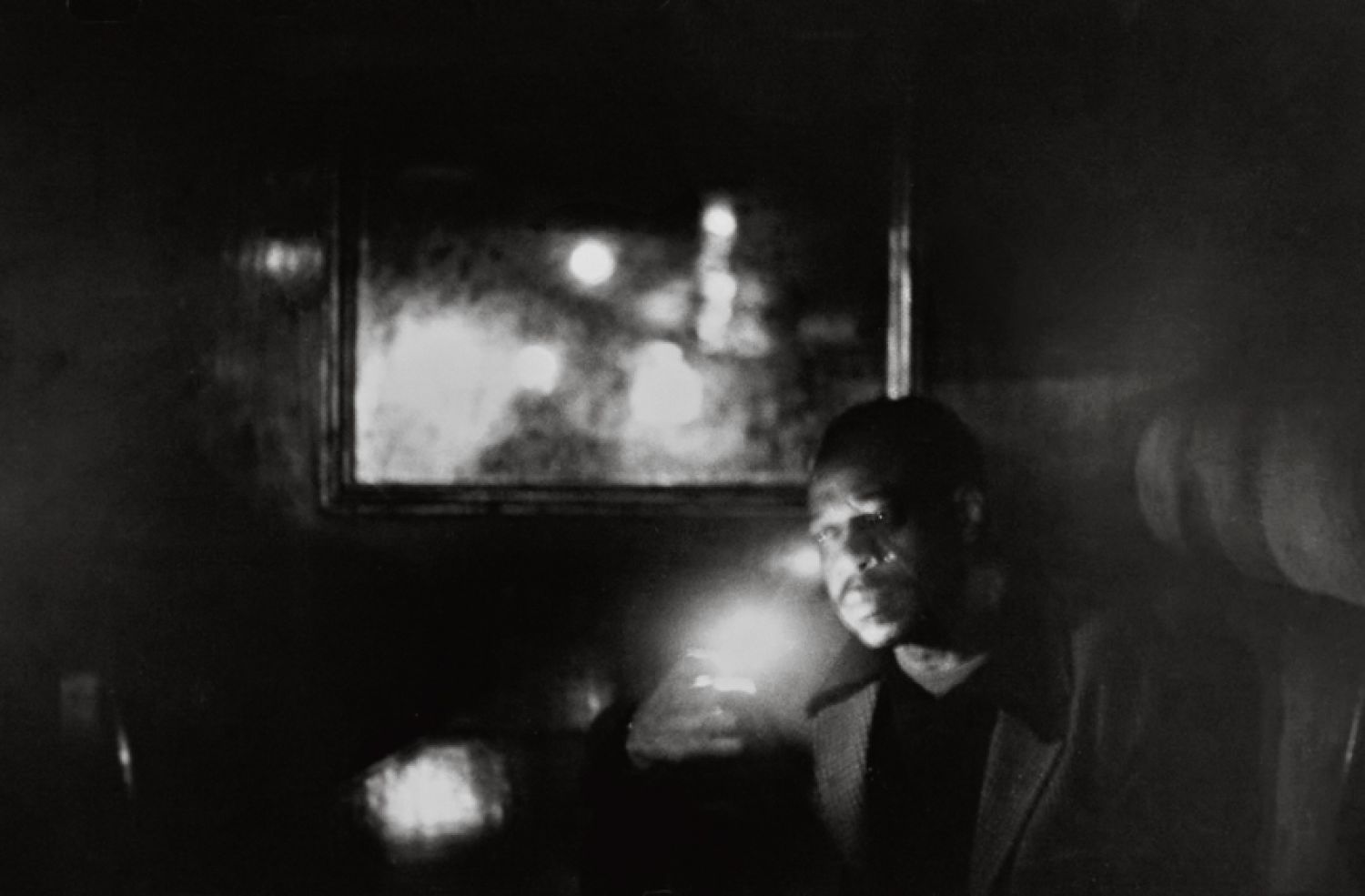
The title makes this suspension still more poignant. “Circular breathing” – the technique by which a musician sustains a continuous flow of air – becomes, in Smith’s hands, almost a photographic principle. Through the prolonged exposure, time is allowed to accumulate within the image: Bibbs is not frozen in an instant but held within a continuous duration, his presence hovering between emergence and disappearance. The photograph seems to breathe with him. Light, movement and surrounding darkness gradually blur the boundaries of his body, so that portraiture becomes less an act of capturing a subject than of sustaining a presence. The photograph does not seize an instant; it keeps it alive.
Rhythm operates differently across Jafa’s and Smith’s images, but in both it unsettles photography’s apparent stillness. Jafa produces rhythm between and across images – cutting, interrupting, repeating and colliding them until the archive itself seems to pulsate like the stripped-down techno music that goes along with it. Smith often locates rhythm within the photographic exposure, allowing time, movement and light to accumulate inside a single image. In Circular Breathing, nothing explodes, yet everything vibrates. If Jafa’s montage can acquire the force of percussion – a beat, a rupture, an impact – Smith’s photograph approaches the sustained note, held almost impossibly long within the surrounding darkness. Both make the still image resonate beyond its apparent temporal and physical limits.
This refusal of photographic fixity as a visual embodiment of their correlated refusal of fixity in identity definitions and representations also shapes their relationship to history and visibility. Jafa takes the vast archive of images produced by American culture and reorganises it so that its contradictions, violence, beauty and buried histories become almost physically palpable. Smith proposes a different but affiliated question: what if another kind of seeing were possible? Her photographs shimmer because beauty is never merely beautiful; light itself acquires a political dimension, determining what can appear, what can disappear, and how much of another person the world is permitted to “possess”. If Jafa makes the reminiscences embedded in the archive resurface through sustained rhythmic pace, repetitions and sudden intensities, Smith allows presence to emerge through light, duration and partial appearance/disappearance. In different ways, both transform visibility into an ethical and affective encounter.
Empathy consequently arises not as a simple identification with the people represented, but through the ways each artist implicates the spectator in the act of seeing. Jafa’s montages can convoke powerful and immediate affective responses, moving between recognition and shock, beauty and violence, attraction and discomfort, while also opening moments of tenderness, grace and transcendence. Smith’s photographs tend toward a slower form of attunement: through intimacy, darkness and partial visibility, they ask us to remain close to a presence that never becomes entirely available to vision. To look empathetically, in her work, is not necessarily to see more clearly, but to attend to what another body reveals while respecting what it withholds. For both artists, empathy is therefore less a simple act of recognition than a willingness to be affected by another presence and experience of the world – and to relinquish any form of mastery over what is seen. The image becomes less something to possess or fully decipher than something to encounter: a space in which recognition, uncertainty and affect can set in motion processes of inner transformation.
Music perhaps offers the most fluid and expanded way of understanding both the affinities and differences between them. For SloPEX, Jafa draws on collision, sampling, repetition and the slowed, powerful pulse of techno, while Smith’s images seem closer to the intuitive, sensory temporalities and tonalities of jazz, where breath, improvisation, apparition and dissolution coexist. Yet pulse and breath need not be opposites: both are bodily measures of duration, ways of keeping something alive through time. Jafa’s image-collages can generate a visual bass pulse capable of shaking the room – and the bodies within it – while Smith can hold a face, a gesture or an atmosphere like a note suspended at the threshold of disappearance. If Jafa’s images vibrate and resound like a telluric tremor, Smith’s photographs shimmer like diamonds caught in the light of her eye.
Acknowledgements
The author wishes to thank Fondazione Prada, Les Rencontres d’Arles and its press partners Claudine Colin Communication / FINN Partners, and Gladstone Gallery, New York, for their generous assistance and collaboration, and for facilitating access to the documentation and images that accompany this essay.
Footnotes
- ^ Curated by Nancy Spector, from May 9 to November 23, 2026.
- ^ Cf. Arthur Jafa, Love is the Message, the Message is Death, public talk at LUMA Arles, 2017 https://www.youtube.com/watch?v=uID7hJh066Y.
- ^ Produced by Les Rencontres d’Arles in collaboration with M77 Gallery, and curated by Daisy Desrosiers, Église Sainte-Anne, from July 6 to October 4, 2026.