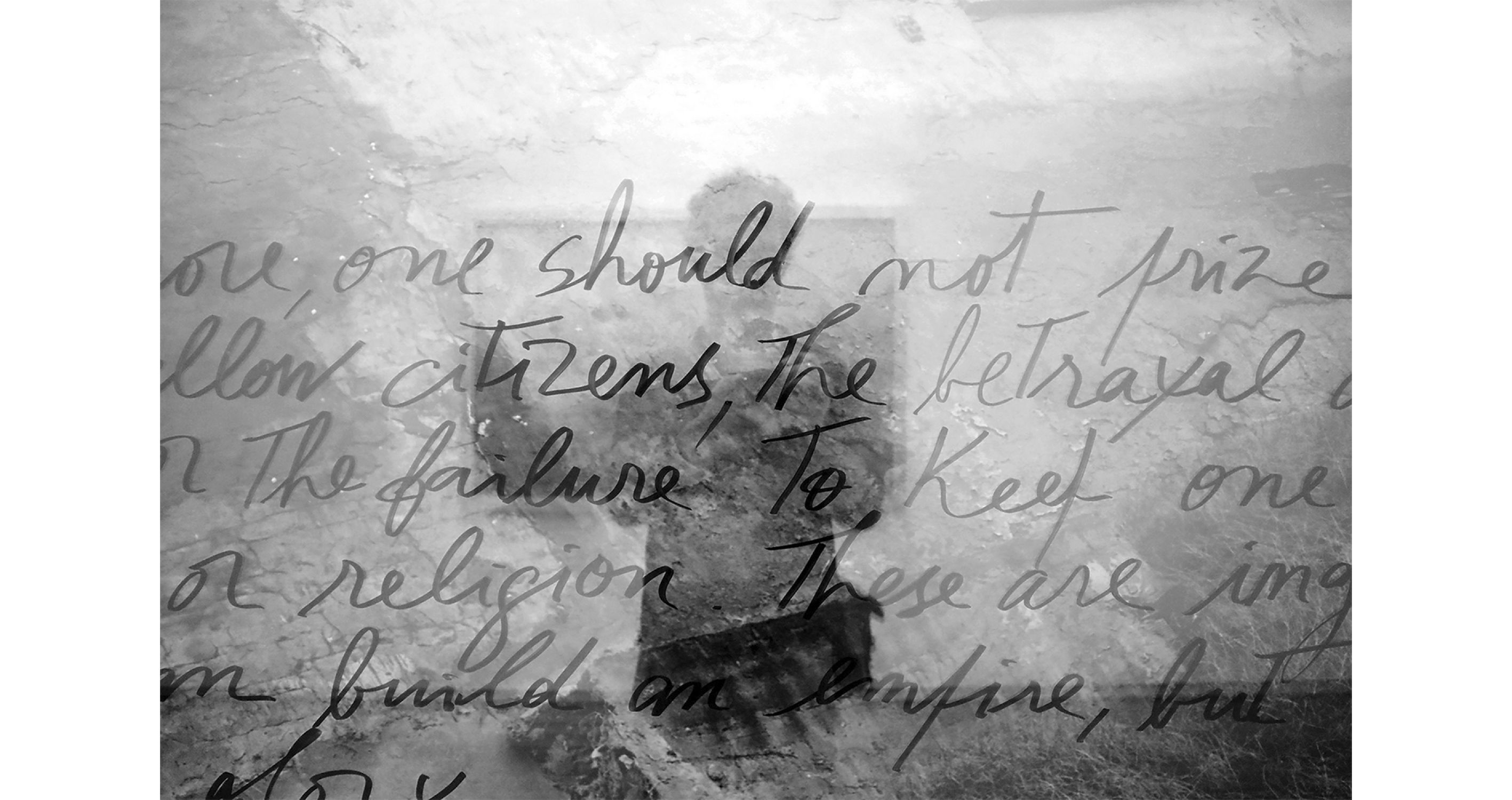
The entire world is a palimpsest populated by multiple meanings and sensibilities. At the Lanín Volcano, the Western mind — which reduces the mountain to a border marker and a tourist attraction — meets the Mapuche mind, which recognizes *Pillan Mawiza Lanín* as a site of encounter with the creative forces of life.
As Ailton Krenak says in his Ancestral Future: «The challenge I propose here is to imagine cartographies — layers of worlds — where narratives are so plural that we need not come into conflict when evoking different founding stories. It is a marvel that such memories still exist in the traditions of hundreds of peoples, whether in the Americas, Africa, or Asia...
These narratives are gifts offered to us continuously; they are so beautiful that they give meaning to the unique experiences of each people within the diverse contexts of life on this planet. (...) Such openings even allow us to refuse to chant the colonial narrative as if it were our last chance at reconciliation—that idea that «to understand ourselves as a nation, we must all pretend there was no genocide.» How can we imagine a national history amidst this continental graveyard? We must rise up, and these confluences can help us do so. If colonialism inflicted nearly irreparable damage upon us, it did so by asserting that we are all the same. Now, we must refute that and evoke the worlds of affective cartographies — worlds where the river might escape harm and life might evade the stray bullet; where freedom is not merely a condition of the subject’s acceptance, but an experience so radical that it allows us to transcend the notion of finitude. We will not cease to die, nor anything of the sort. Rather, we will be transfigured. After all, metamorphosis is our natural state—just as it is for leaves, for branches, and for everything that exists.»