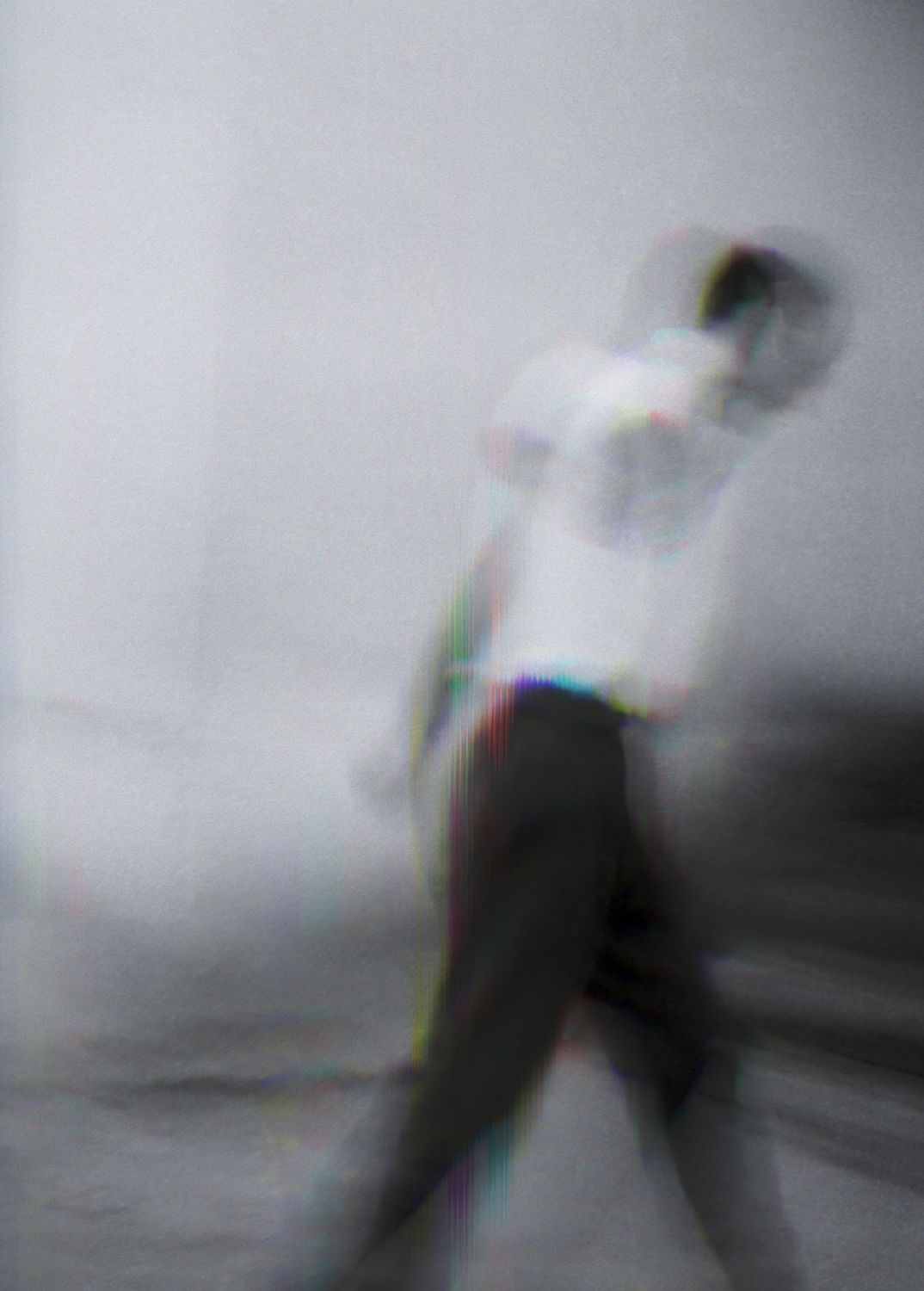
20 avenue d'Ivry, Tokyo Tower, Les Olympiades, Paris 13.
Walking with my mother along Avenue d’Ivry, where we lived for 12 years, is a recurring and sacred ritual.
In this place, which was once a playground filled with shouts, roller skates, balls, kisses, tears, and friendships, my memory always come back in fragments.
Tokyo Tower is one of the gateways to the «Olympiads» neighbourhood – Les Olympiades.
The neighbourhood is a giant horizontal platform, punctuated by high towers with low urban constructions in the centre — resembling Chinese pagodas that house various shops— alongside a second, smaller level from which a single, lower yet horizontally long building emerges.
When it was first inaugurated, the neighbourhood was gradually populated by many different peoples and political exiles, primarily Asian. An exile story that was also our own.
The avenue had it all: Asian restaurants, supermarkets, the school, the dentist, music lessons. Our family doctor was located right in our own tower. He is still there, and I wonder how old he must be.
Avenue d’Ivry is curious, short, intense, and colourful. The extension called Les Olympiades is its most intriguing part, a hunchbacked avenue, carrying a certain weight on its shoulders, where millions of windows and passersby also tell a story of the deep solitude a city can contain.
From my filming perspective on the Tokyo Tower plaza, we look down at the avenue in a slight high-angle shot (plongée) wrapped in desolation and decay, marked on the walls, alongside the flow of people.
Near us that day, while I was filming the main shot of the movie, a woman was on her phone with her mother, speaking in a foreign language. It felt to me like she was talking about the neighbourhood, but I couldn't understand anything she said — only «mama» and «residentano» brought me back to something familiar, perhaps... and it doesn't really matter anyway.
In this observation of my memory's territories, I listen to the passing voices, the sounds that appear and disappear, pieces of stories that approach and recede, like dreams we try to grasp upon waking.
And so, en passant, I listen to the floating and musical punctuation of the urban fabric, merging with my fragmented, broken, nomadic, and incomplete memory.
Filming, then, is just like walking: dissonant rituals steeped in fragmented reminiscences, unexpected encounters, and fading dreams.
Image, sound and editing carried out on a mobile phone.
Music: Romance Anónimo by Antonio Rubira
Performed by Louise Wucher – who discovered the score for the first time whilst preparing for this piece.