«Please do not disturb: seismograph equipment»
Text by Mattia Denisse and images collected by Alexandre Estrela
Breakfast with Gérard F., a friend of my father. An egg-shaped skull with little hair, but for for one unruly lock. Gérard lives in a house half-buried in the ground, with a bedroom (a bed, a television), a kitchen (a table, a chair, and the bare minimum of utensils), and a bathroom (a shower equipped with a pink curtain, a toilet, a mirror). In spring, summer, and autumn, he works as a lumberjack and cook. When the cold season arrives, he hibernates and rarely leaves his bed. During this winter period, breakfast is his only meal. In a large bowl, Gérard F. gently lays, on the black, gleaming, immaculate surface of the coffee, seven madeleines. Freshly taken from the bag, the air-filled madeleines float adrift. Gérard F. attentively watches the subtle movements of the archipelago. Like a hunter lying in wait, armed with a tablespoon, he patiently awaits the moment of collapse, when the madeleine, soaked in coffee, suddenly sinks. Then, with one swift, nimble movement, before it reaches the bottom of the bowl and falls apart, he plucks it out and swallows it.
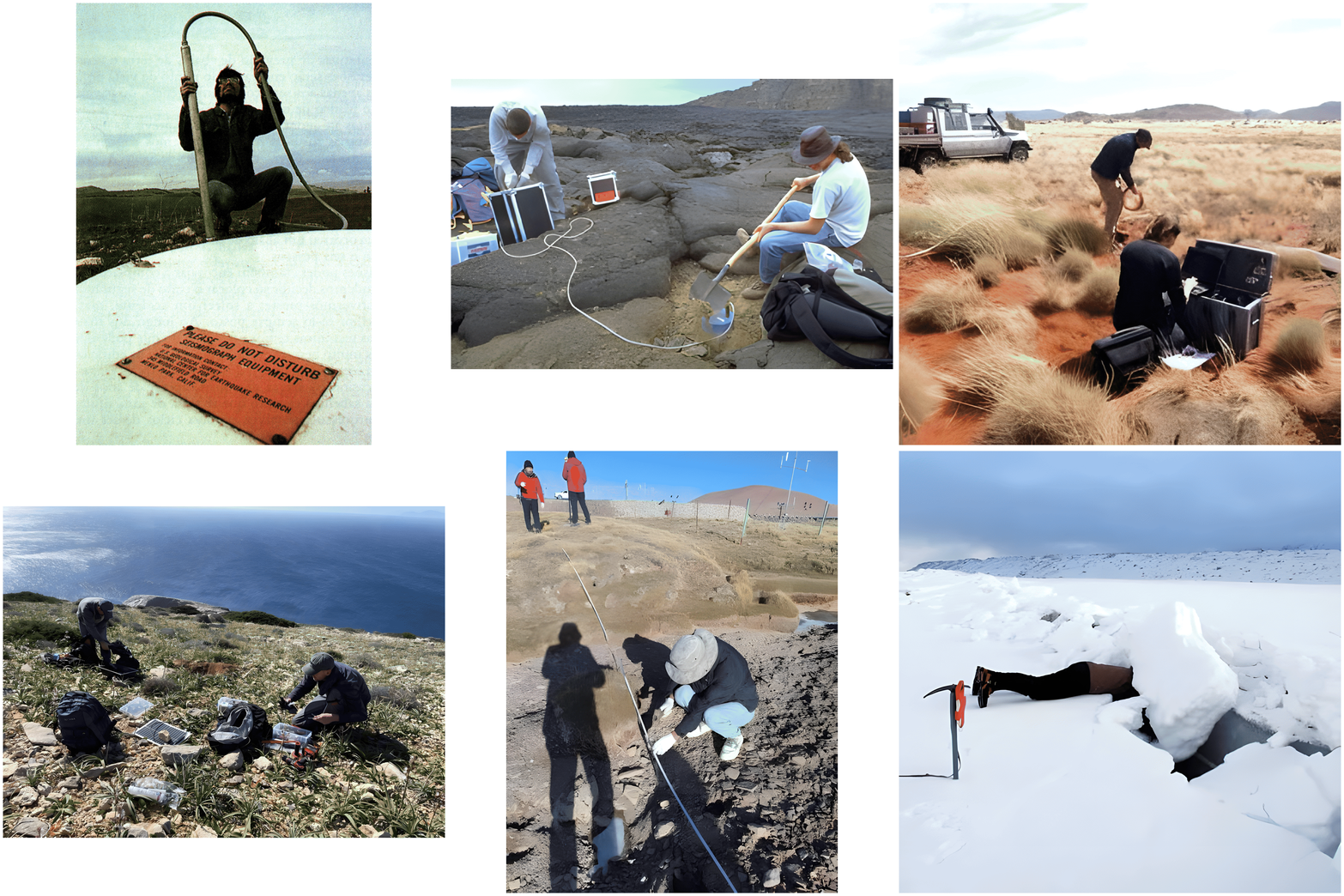
‘Please do not disturb: seismograph equipment’. The moment zero, the first frisson, the incipit: that which reverberates through every phrase, every page, every phase. According to Leibniz’s theory, a space-time point where everything, past, present, and future, is won or lost. Absolutely everything!
First orgasm: Something shakes me from head to toe. Nobody warned me! Something stronger than me, in me. A tiny internal earthquake, with tremendous consequences.
Specialist in tremors: An emblematic figure of the American Western: the Indian kneeling with his ear pressed to the ground. He knows exactly how many horses there are and the distance separating him from the cavalry on his trail. As a rule, if not Sioux or Cheyenne, he’s Apache. Another expert: the Plains Indian, lying on the railway track, his ear—his favourite instrument—pressed against the steel rail, his right hand slightly raised to summon greater silence, in a state of complete concentration. He can, thanks to the vibrations travelling from rail to rail, accurately predict the moment when the "iron horse" will pass the exact spot where he lies.
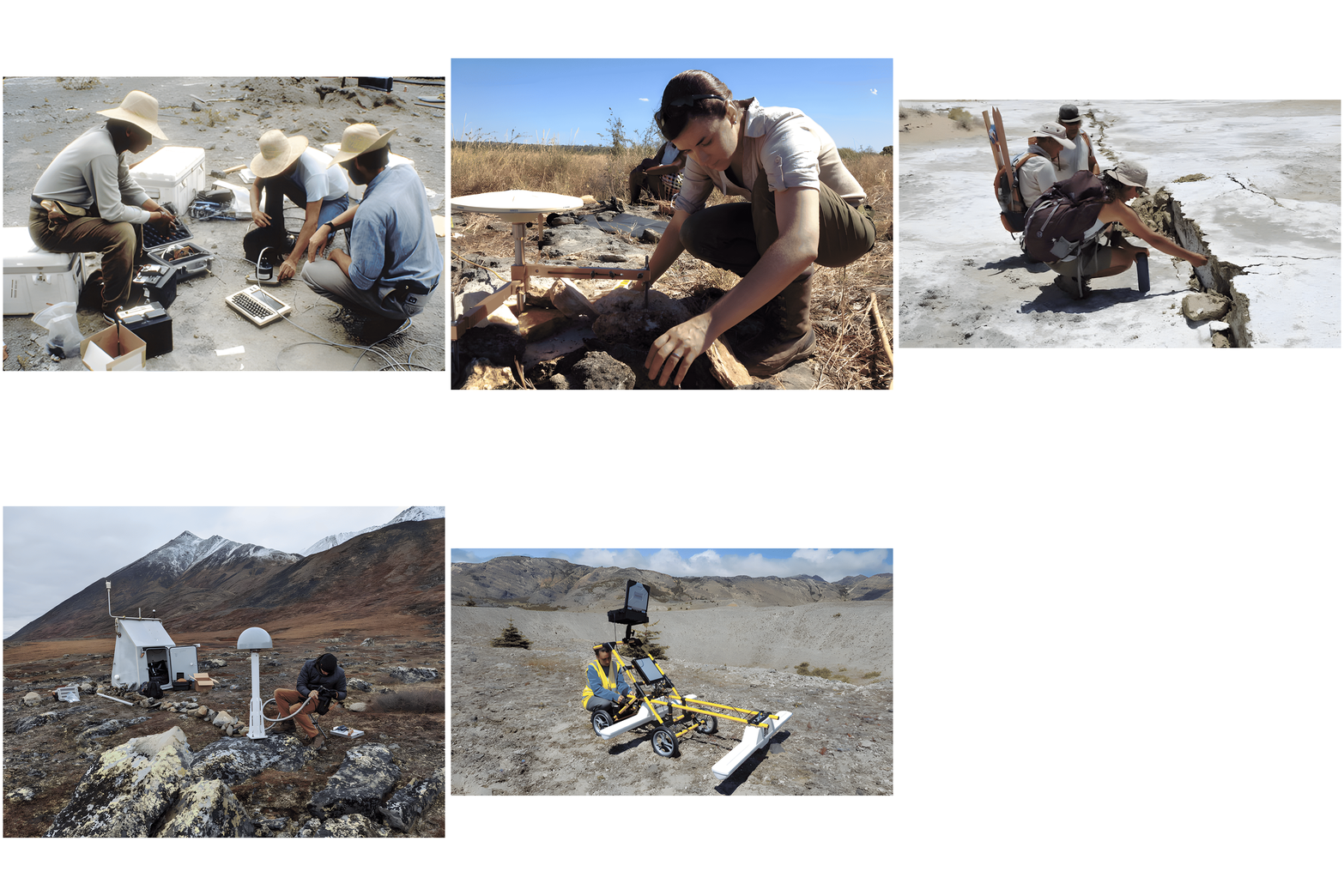
The Romans were cruel, everyone knows this. They were also unreasonable; the proof: they ate lying down. The crucifix, together with its crucified, was the first truly effective Roman seismograph (once again, the instrument and its operator in a symbiotic, mutualistic relationship). How did it work? When the earth trembled, the cross, with its main shaft planted deep in the ground, trembled as well. As a result, the nails shook inside the wounds, and the crucified cried out in pain and rage. Perhaps he cried in the direction of the epicentre, perhaps to confront it, insult it, or at least express his outrage. Since the crucified could not turn around because of the cross, with arms outstretched, at least three were crucified at every performance (as, for the Romans, it was all a spectacle!). The members of the group were arranged in a circle so that each of them, thanks to their peripheral vision and flexible necks, could glimpse the ghostly image of their neighbour. Thus, the condemned could contemplate the landscape and, should the earth happen to shake, point with precision towards the root of the terrible curse.
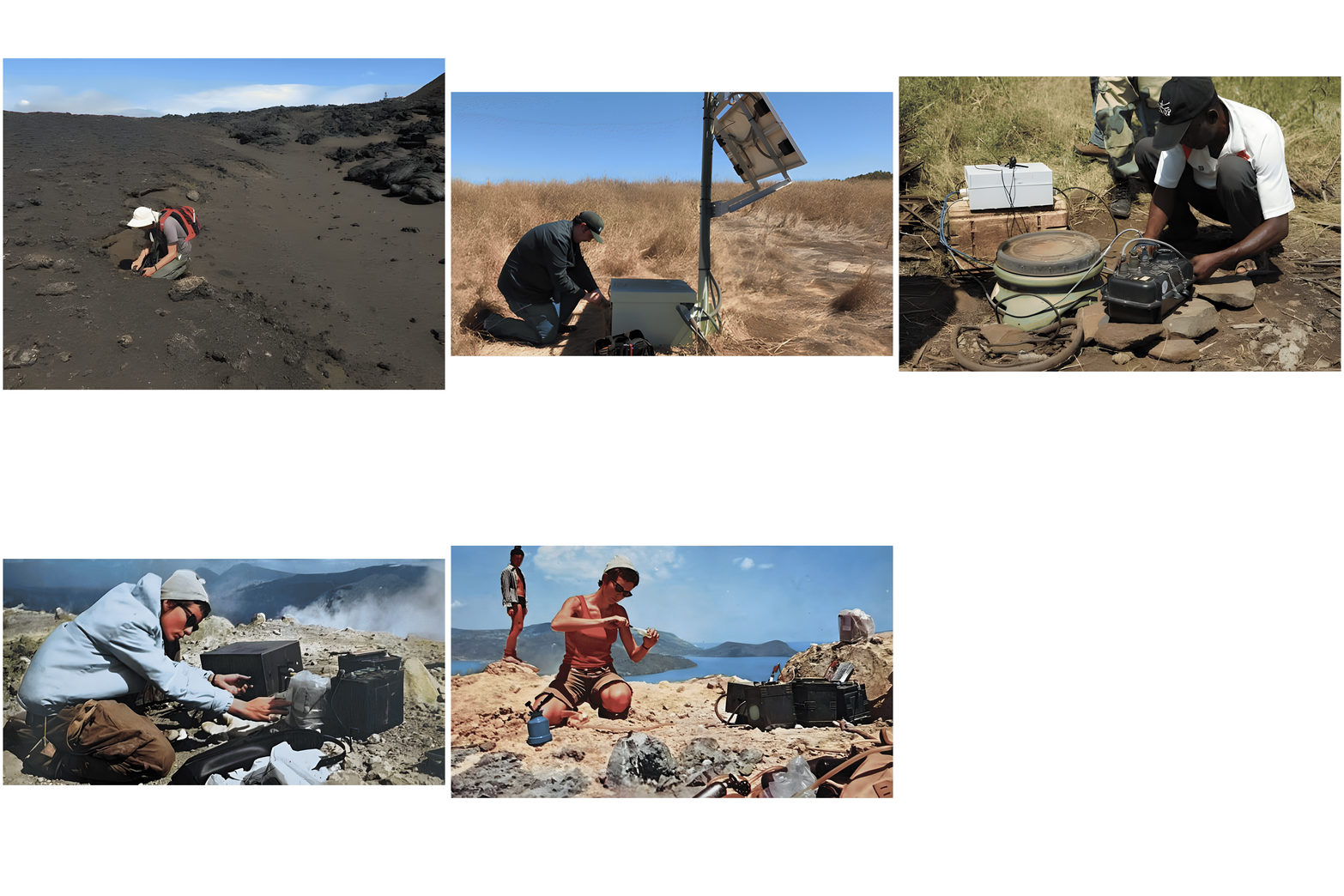
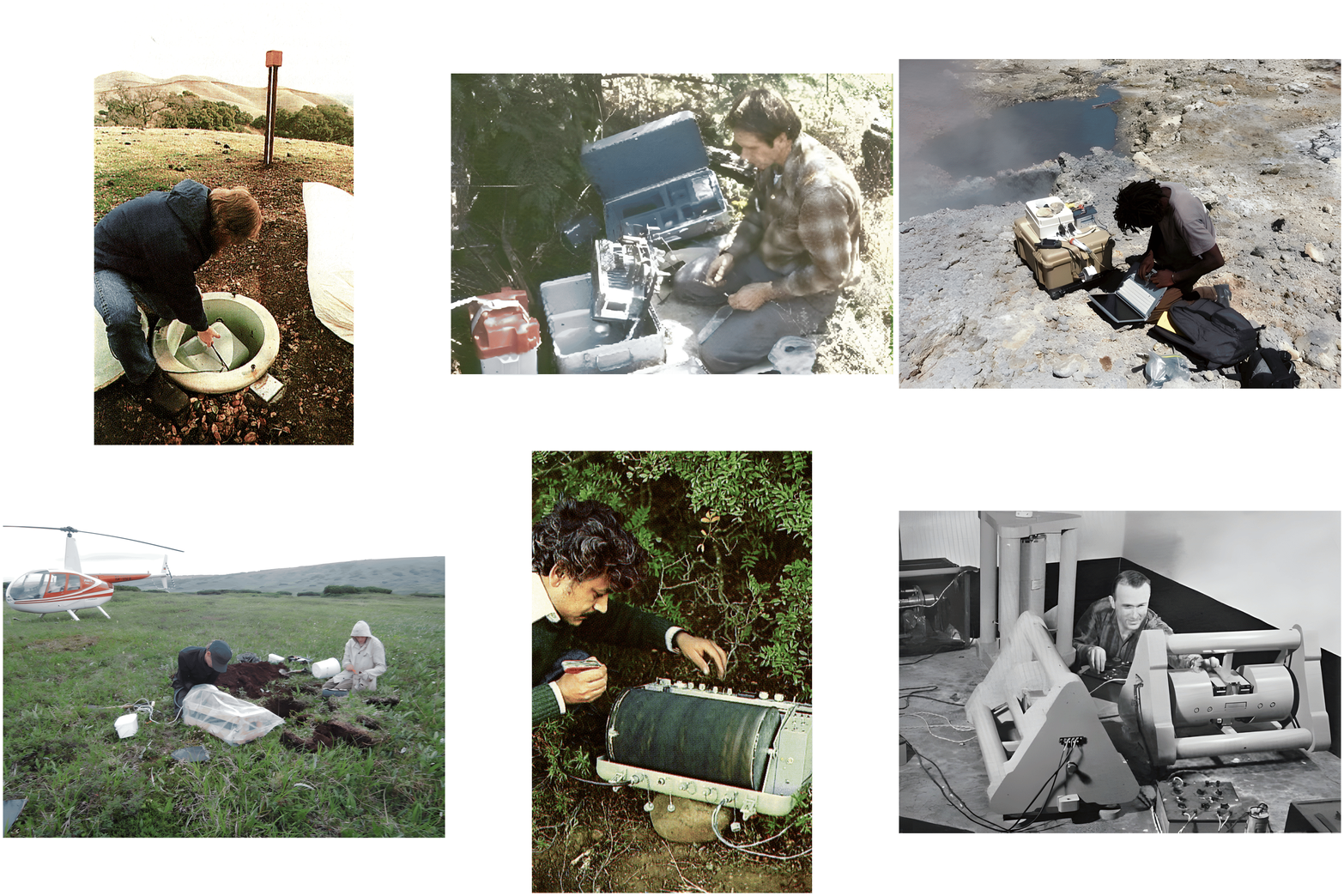
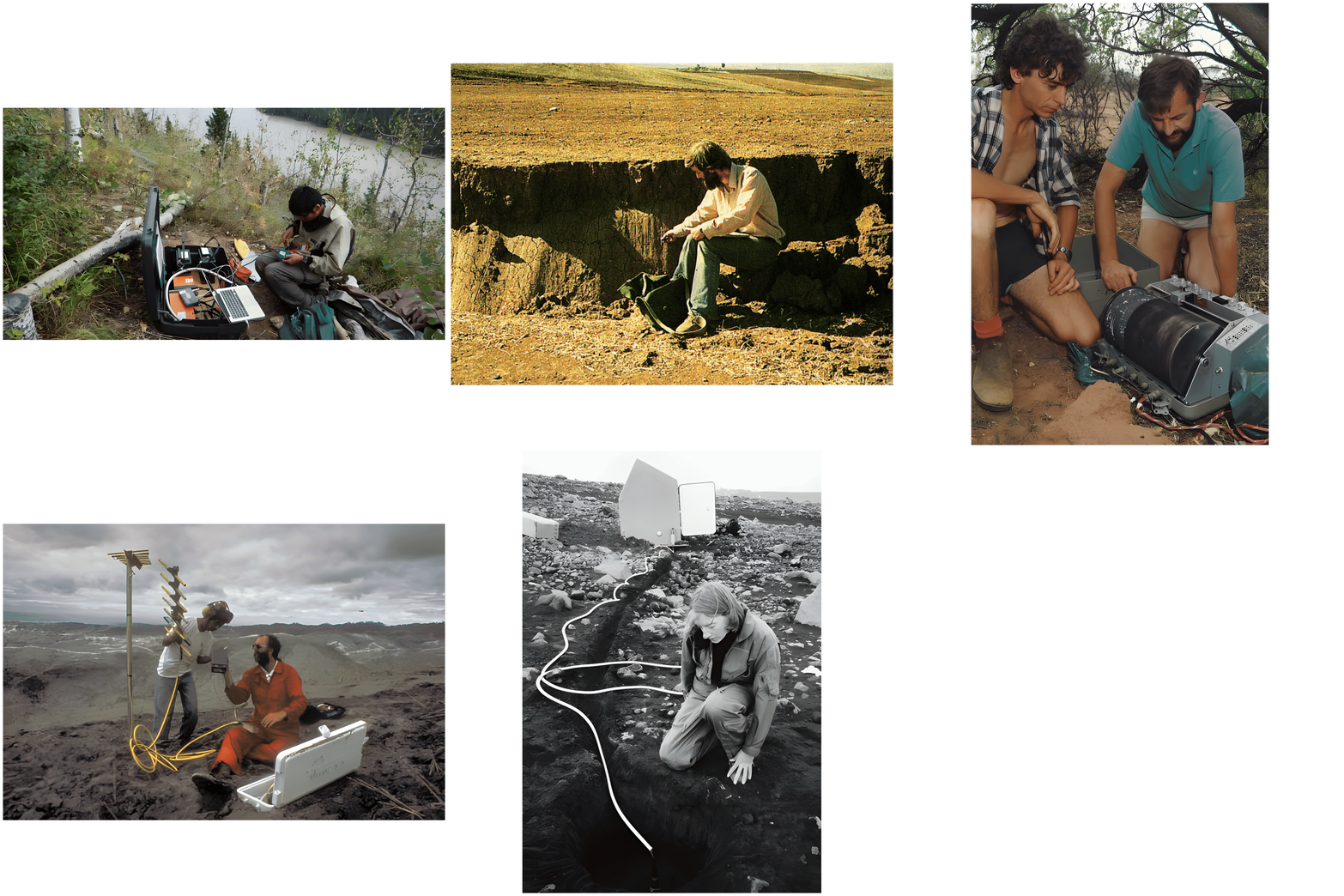
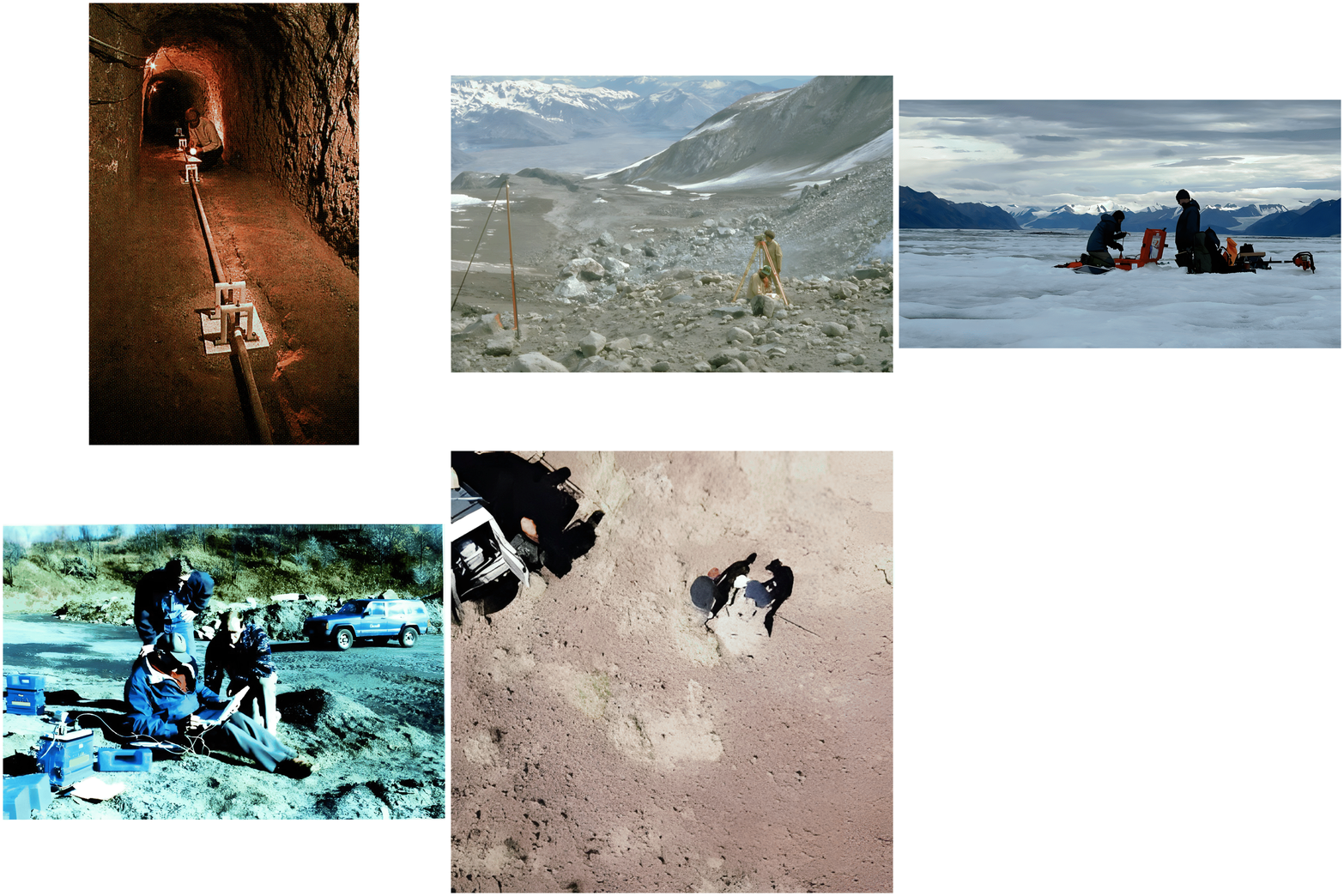
Within the genre: a photograph of the protagonist crouching beside his instrument, in the broadest sense of the term, there is Attila, the wild boar hunter, with his weapon on one side and his prey on the other; the catfish angler (a large physostomous fish with barbels and no scales), more docile than the hunter, likewise photographed crouching, though carrying the pet fish in his arms—provided its weight permits. There is also the soldier with his machine gun, the lumberjack with his chainsaw, the footballer with his ball. And finally, let us not forget Nipper, the Jack Russell terrier painted by Francis Barraud (its owner), sitting with one ear pricked and pressed against the horn of a gramophone. The volcanologist, too, will sometimes allow himself to be photographed kneeling beside his instruments, though not always, since the ground is often far too hot.
Q.E.D.: We crouch beside our instrument when that which it measures far exceeds us.