Liberdade
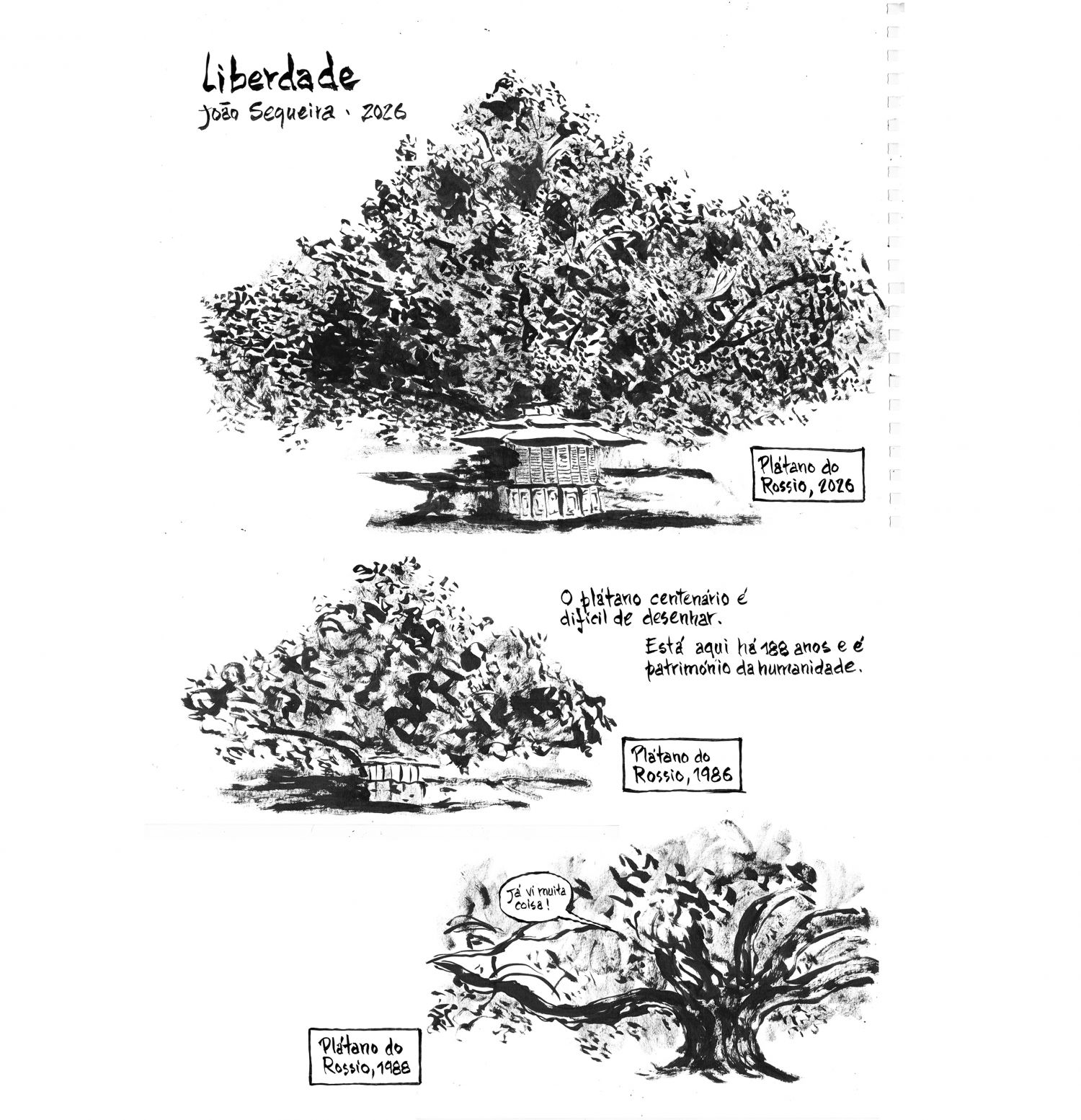
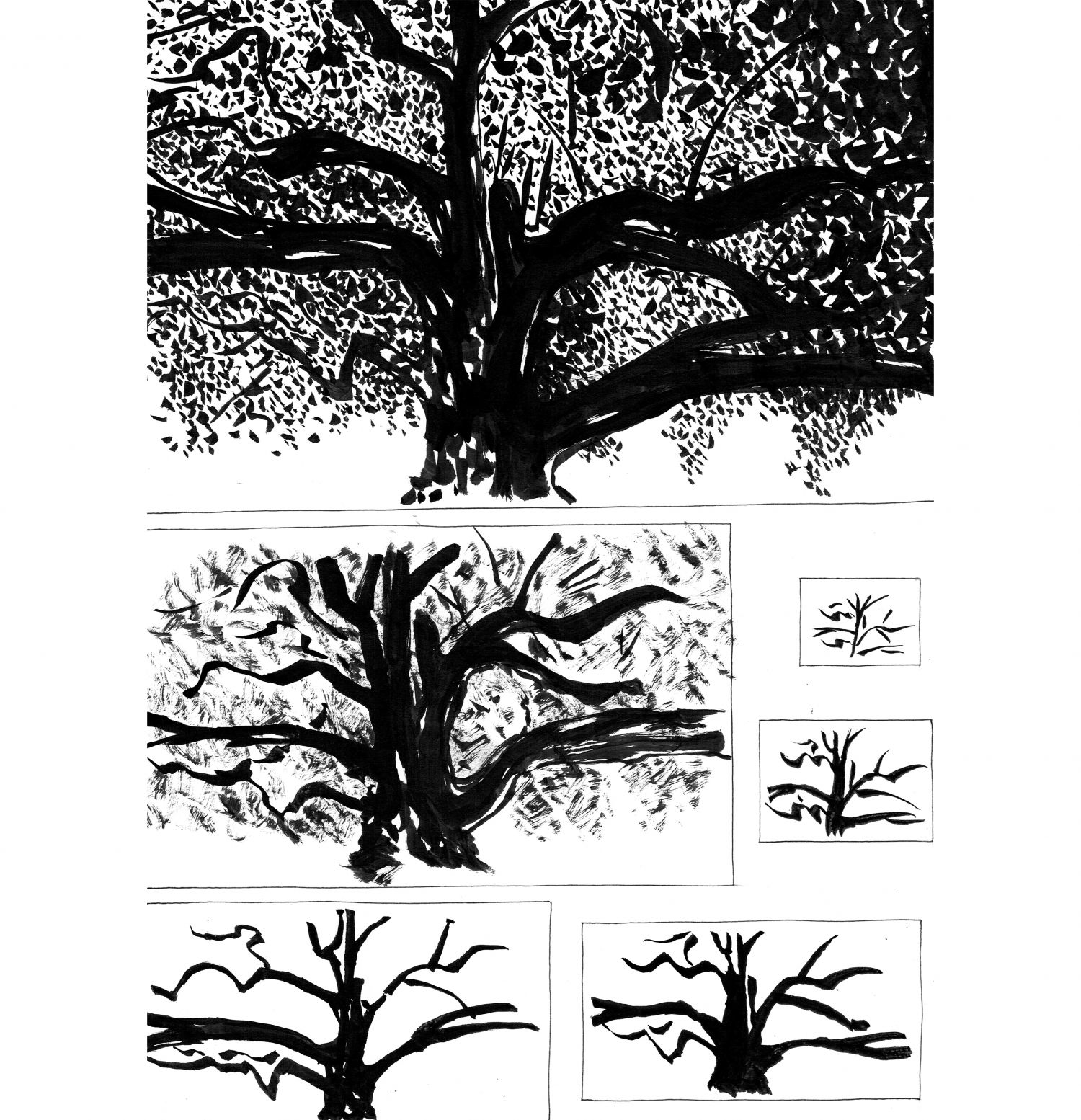
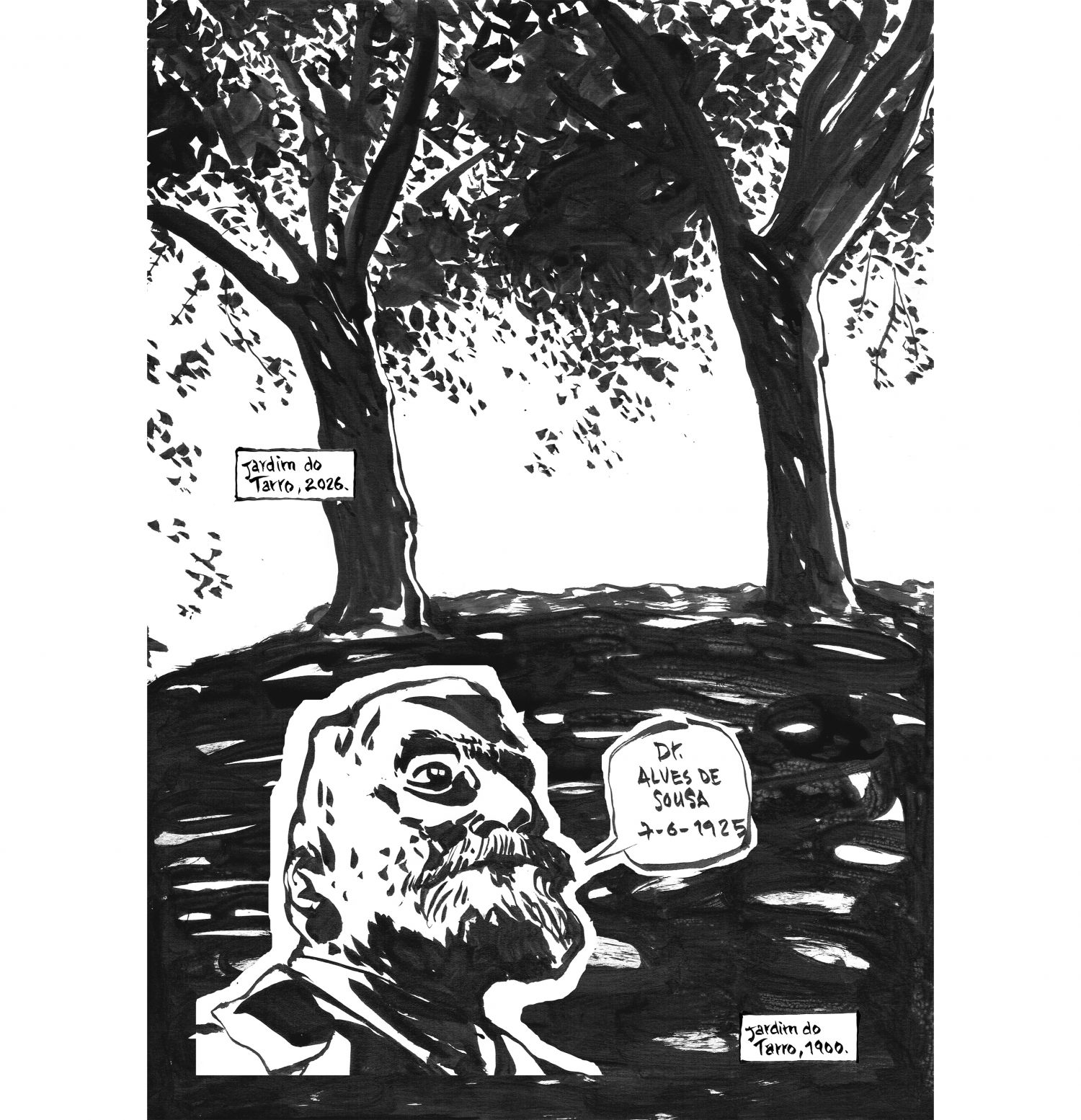
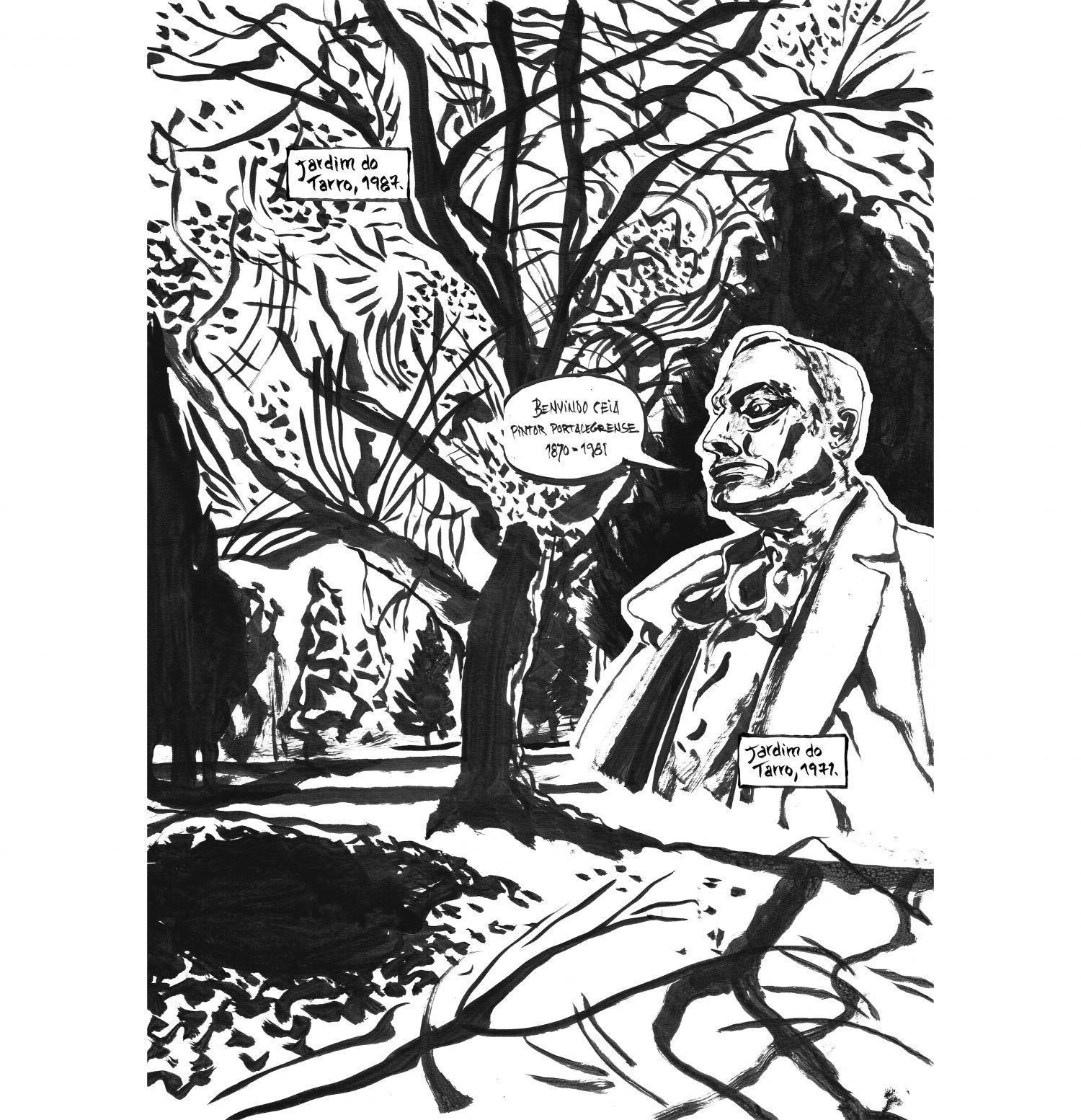
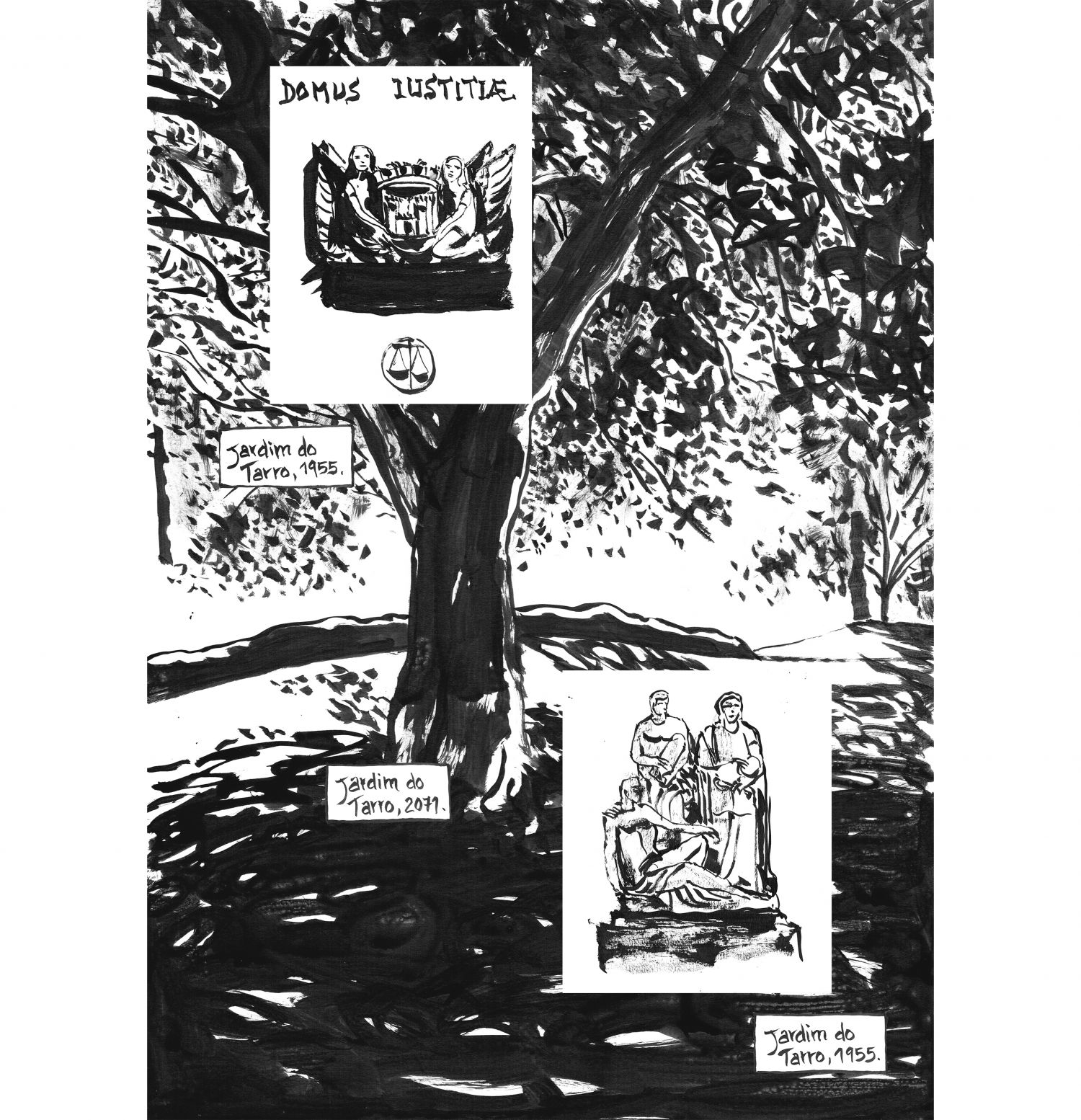
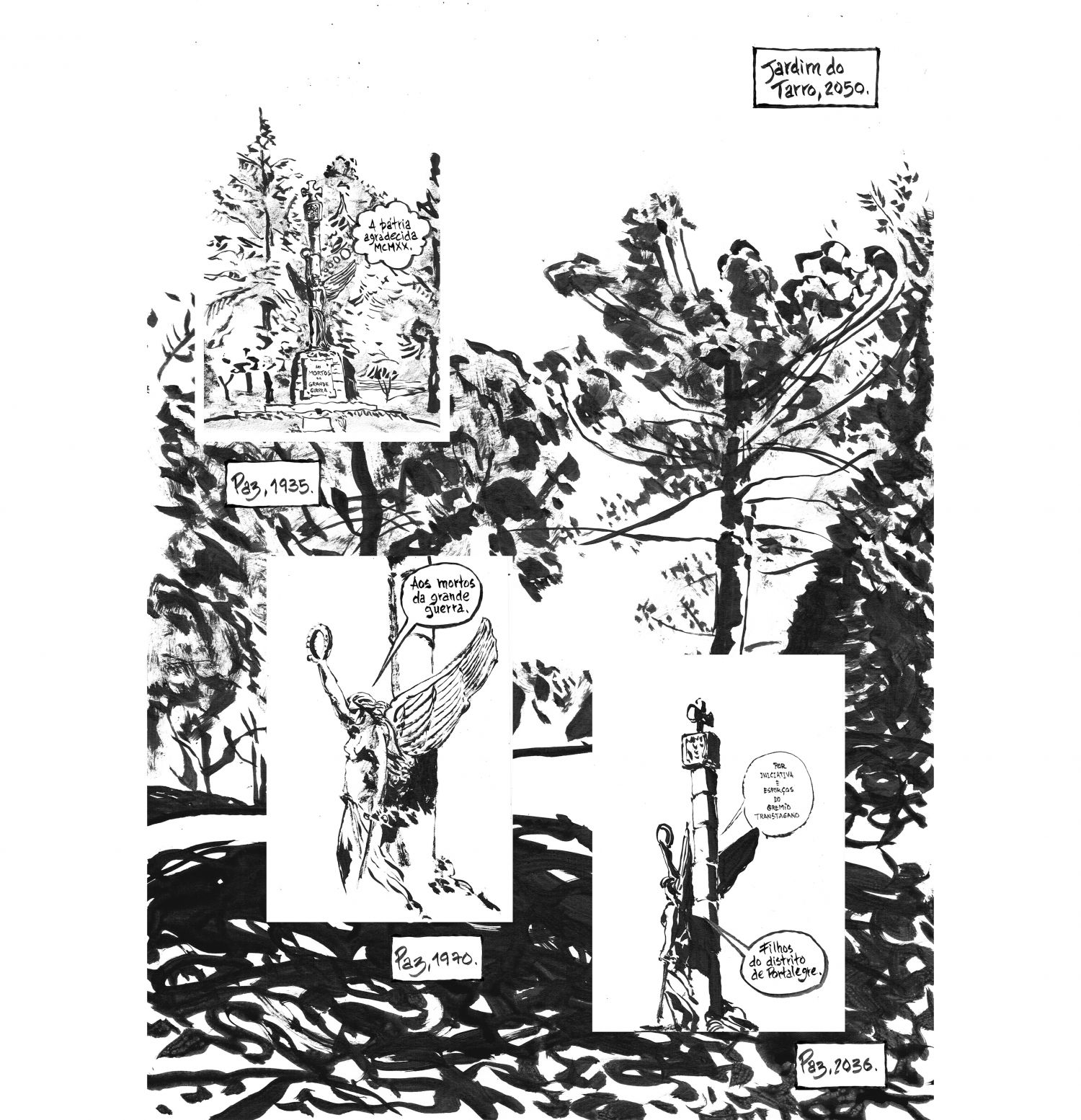
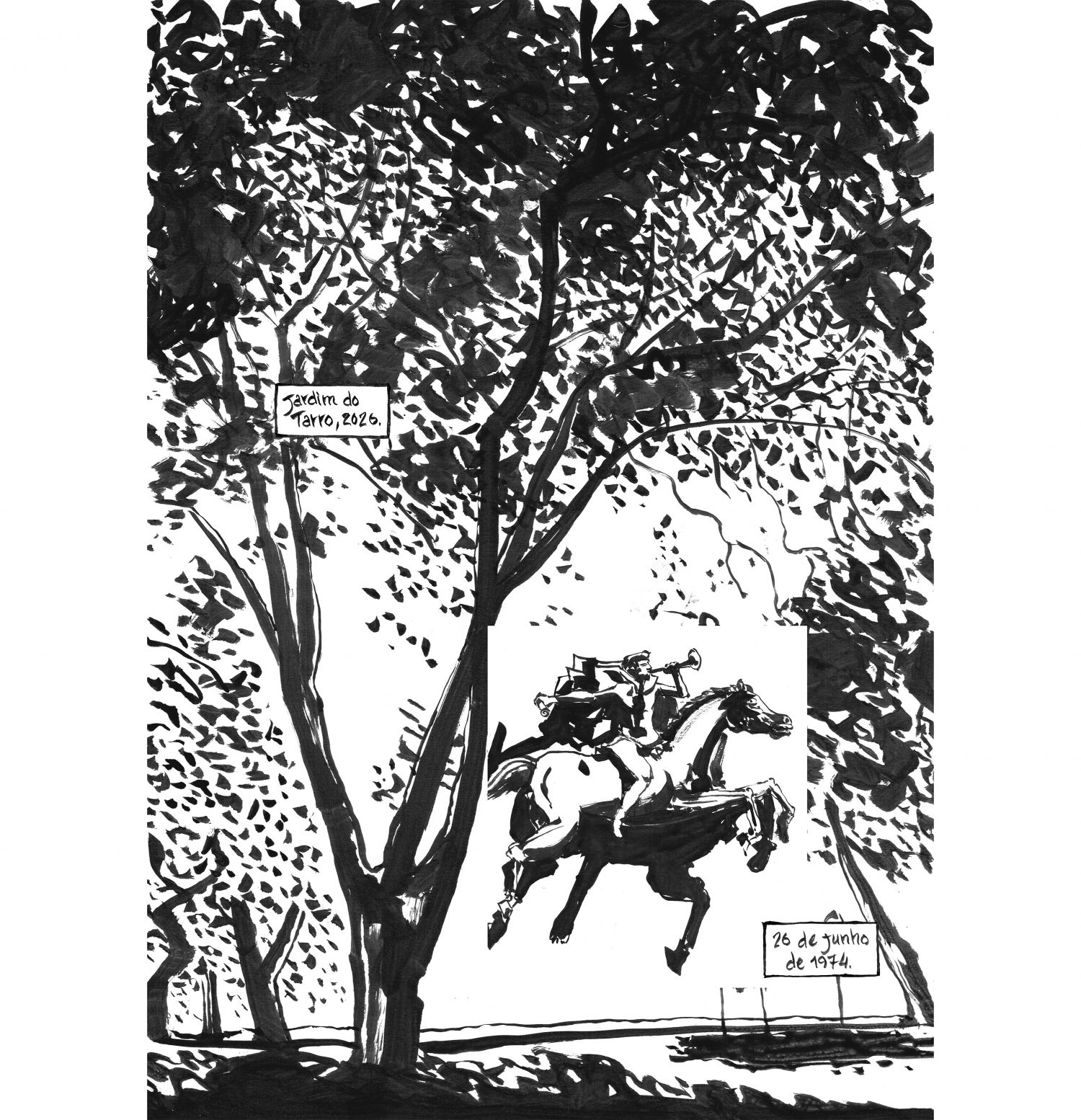
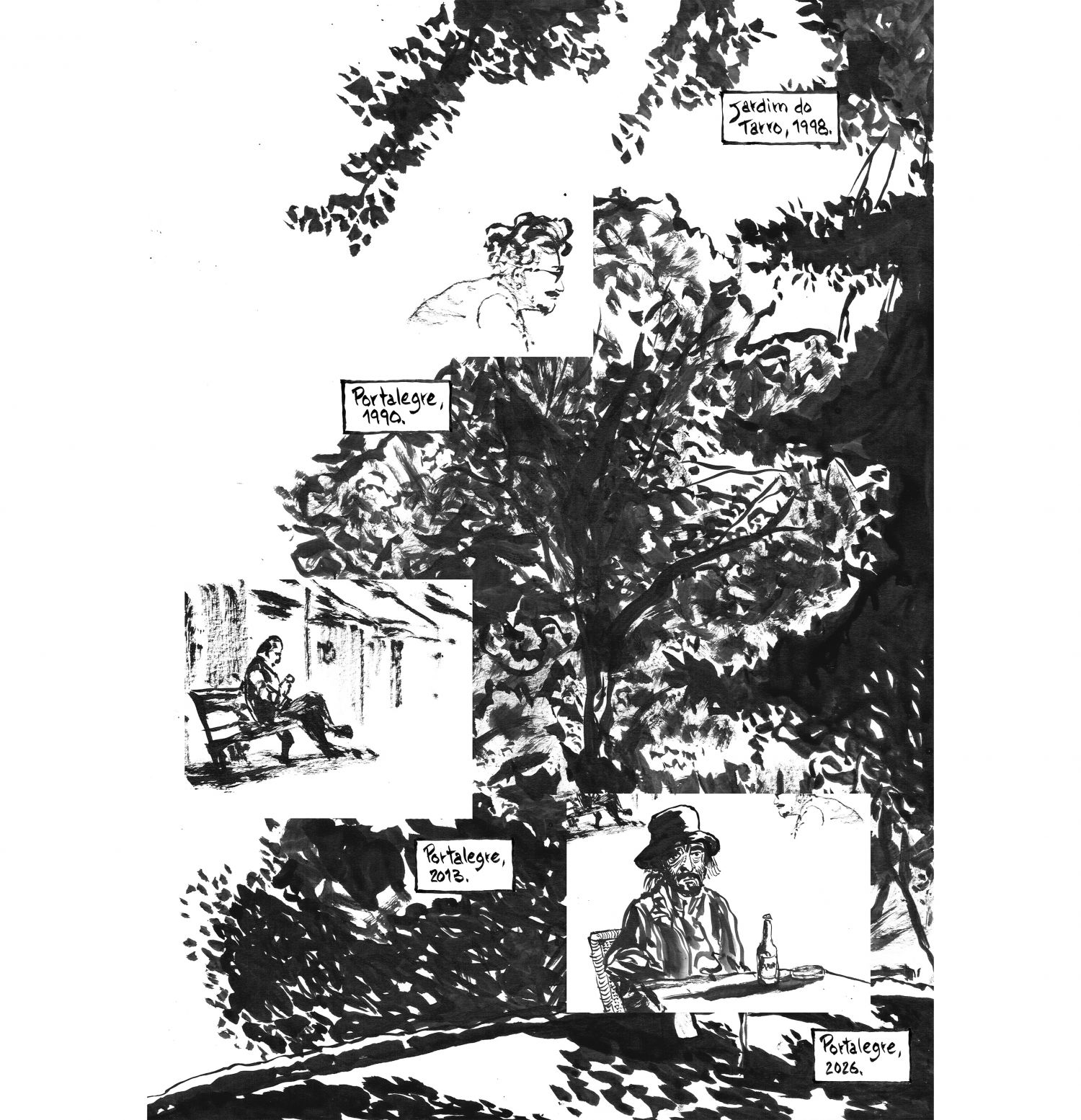
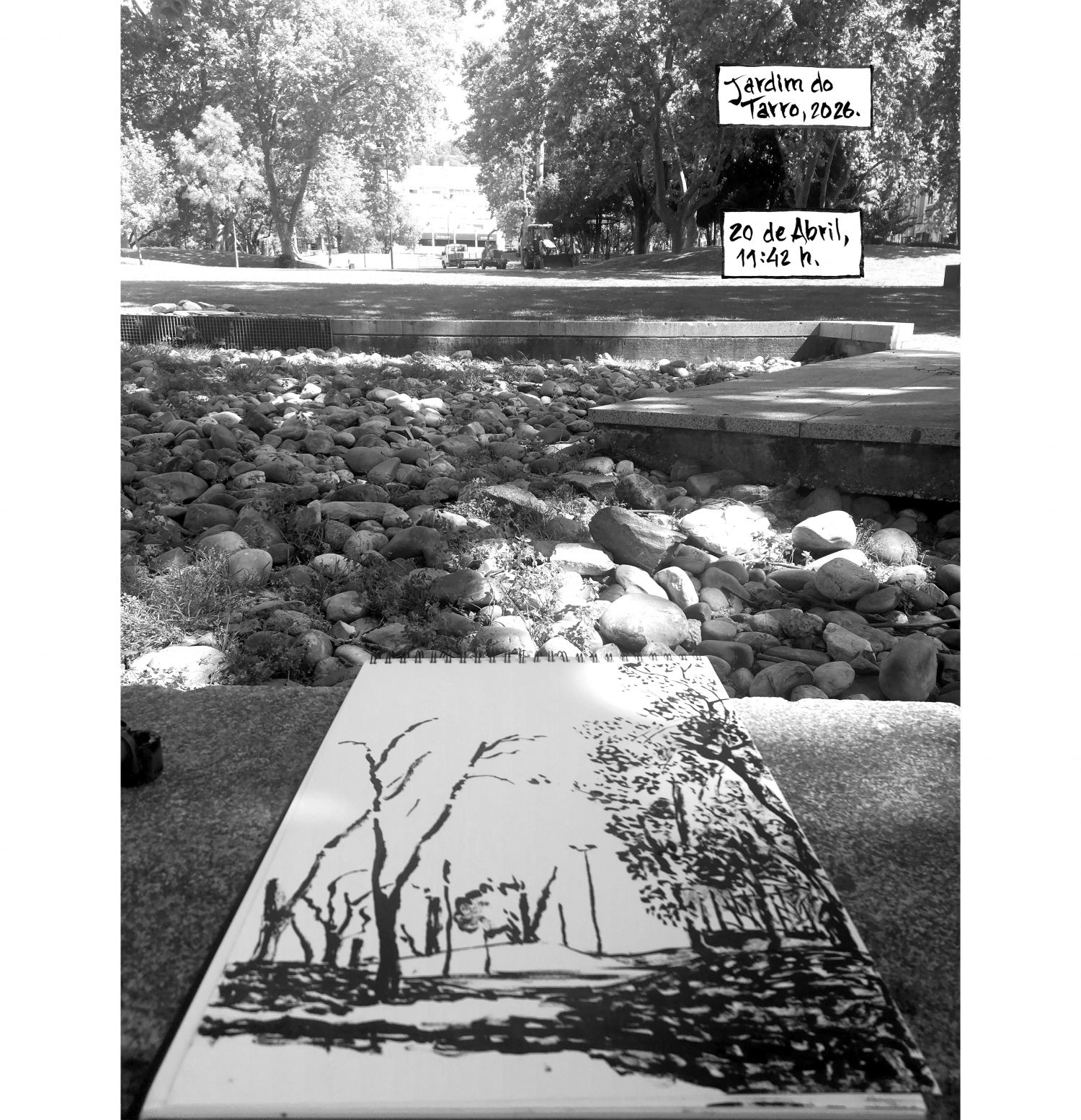
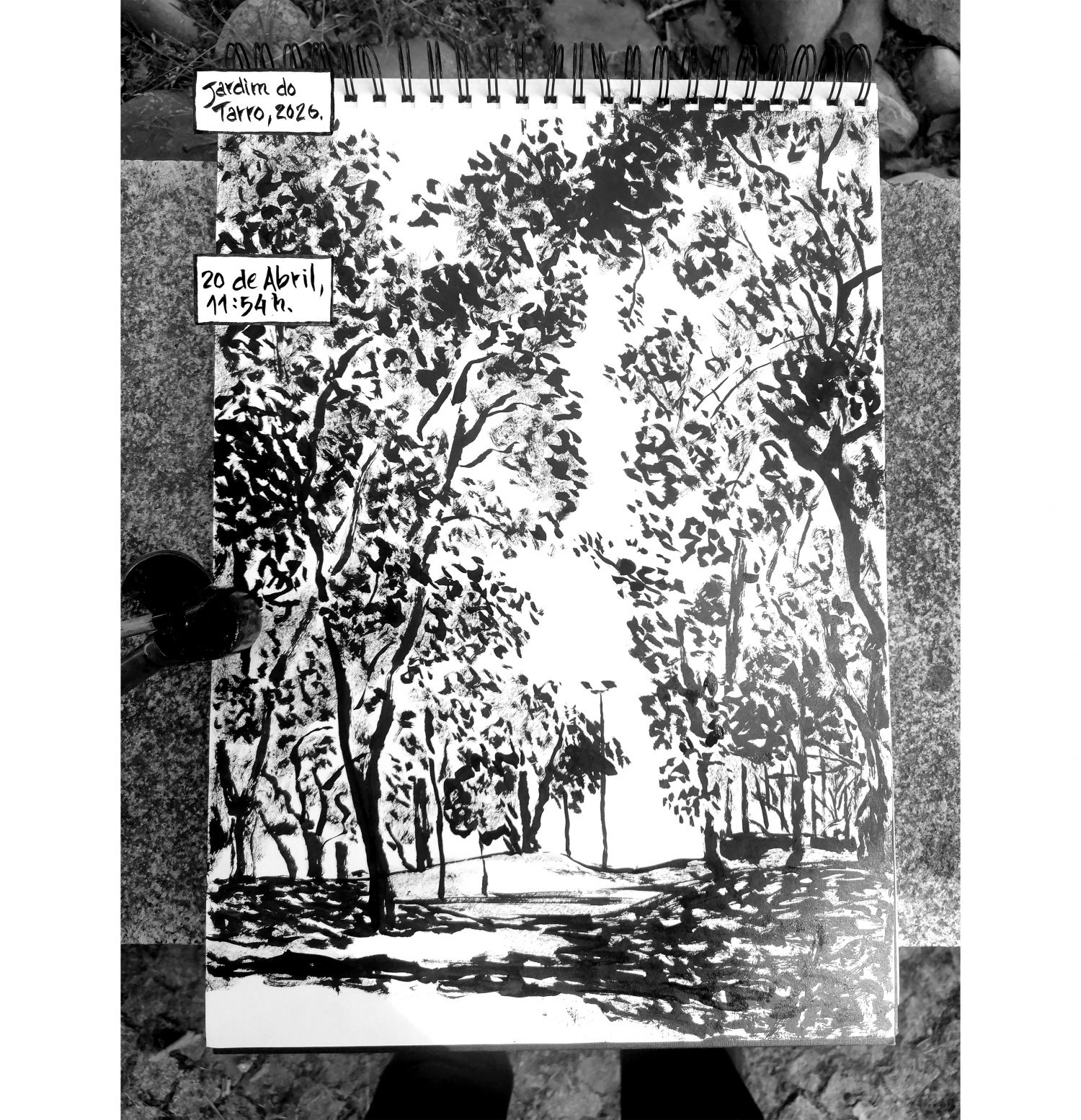
This visual essay of Avenida da Liberdade in Portalegre was carried out as part of my research about the role of improvisation as a resource in comic book creation, which I am currently undertaking as part of my PhD in Contemporary Art at the College of Arts – University of Coimbra.
I am interested in bringing the experience of street drawing into the studio.
In this work, I contrast those drawings made on site, based on reality, with those I made in the studio, based on photographic references. In this contrast, created for these pages, I seek to understand what unites and separates them, reflecting on the different environments in which they were made and how those conditions influence and shape the act of drawing.
We draw with all our senses and experience different sensations in different physical spaces. All these sensations converge and are reflected in the drawings.
Street drawings emerge in a context of unpredictability, as we are exposed to various distractions and potential interruptions. We find ourselves immersed in the subject we wish to approach, surrounded by a series of external factors with which we interact. When drawing on the street, we are confronted with variations in light, with the presence of people standing between us and the subject of our drawings, or whose movements we perceive through our peripheral vision and who, at times, interact with us during the process, momentarily pulling us out of our flow. But also with the environment’s sounds and scents or the weather conditions: the cold that makes our hands tremble, the heat that causes sweat to drip onto the paper, or the wind that stirs certain elements of the landscape.
All these elements cause our attention to be divided, which may be disruptive, but also can lead us to alternate between the roles of performer and observer or spectator, contributing to a detachment from the act of drawing, returning to it with a more critical and informed eye.
These conditions contribute to a sense of urgency to maintain a constant workflow and ensure permanent attention and concentration, resulting in faster drawings, more fluid and concise, and which avoid hesitation or corrections.
When I’m outdoors, I mostly draw standing up. This allows me to reposition myself to avoid obstructions to my view, but it also causes the physical fatigue which accelerates the execution of the drawings. This position also forces me to draw with my hand suspended, which the Chinese painter and art theorist Shitao referred to as the «free wrist» or «empty wrist» with the movement of the brush originating from the shoulder, thereby allowing for a wider range of brushstrokes.
Drawing in the street is drawing in motion, thus bringing us closer to its essence: the recording of the gesture.
The studio, on the other hand, is a controlled and comfortable space. I draw seated at the easel with my arm supported, moving the brush with my wrist, hand and fingers, which results in shorter, more restrained brushstrokes. I am alone; I control the temperature, the sound and even the scents. I eliminate or avoid distractions. However, it is harder to resist making corrections.
Drawing from the static, two-dimensional, flattened image of a photograph makes the process easier, but it also removes the challenges which, in my view, can enrich the drawings. On the one hand, drawing in a studio setting makes it easier to maintain a state of flow and avoids distractions or interruptions. On the other hand, the sense of urgency is lost, which sometimes leads us to continue the drawing for too long, without realising when to stop, prolonging the drawing with elements and details that distract from the essential.
The narrative presented in these pages is based on a process of cutting and pasting the various drawings I have made, seeking to construct a portrait of the Avenue and its symbolism, integrating into the images of the green spaces of its central garden some of the iconography that populates it and tells part of the city’s history, ending with an allusion to my working process which, in this case, favours street drawing.
The dates scattered across the panels point to moments in my life and in the city, alluding to the essence of the comics, which is time in space.
With these unidentified dates, I invite the reader to form their own interpretation by actively participating in the creation of the story.
I conclude from this analysis that sometimes imposing barriers and putting ourselves in uncomfortable situations can result in drawings that are more expressive, natural and honest. Bringing the experience of street drawing into the studio can be understood literally: I use these drawings directly, without alterations or corrections, and compose them on a comic book page, arranging them sequentially on the sheet and seeking communicative relationships between them.
But it can also be understood as the application of procedures that I transfer from street drawing to studio drawing, with the aim of placing myself in the same state of distributed attention and urgency that I mentioned earlier. As I said, in the studio it is tempting to resort to corrections, to draw whilst seated with one’s hand resting on the table, and to create a working environment that excludes distractions. To overcome these temptations, we can consciously impose time limits on ourselves, refrain from making corrections, and draw standing up. We can also artificially create an environment that provokes distractions, such as working with the radio (or television) tuned to news or debate channels, thereby promoting this alternation of attention between spectator and performer, which, in my view, helps to recreate the street environment in the studio.
All these options are ways of bringing me closer to the expressive results I seek.